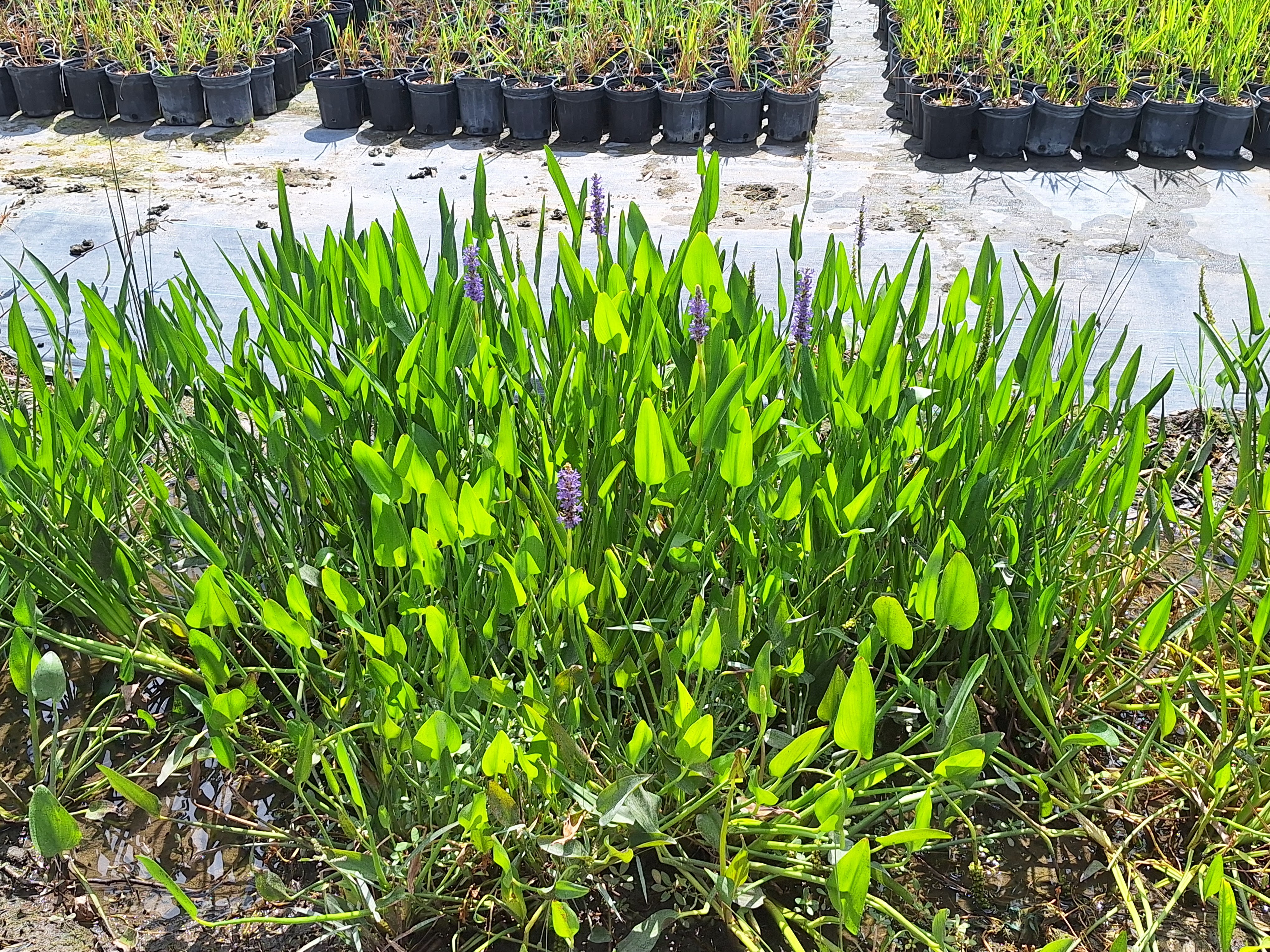
Thursday, January 1, 2026

Which is the right "hot take" regarding our political situation and the way out?

As 2026 begins, many Americans, including me, are reflecting on our deeply troubling political, cultural, economic, and environmental dysfunction. I know this because of all the hot-takes and hand-wringing about it I see and hear on the Internet and in real life. My contribution today will be a hot take on the hot takes; a meta-hot-take, if you will. Here's what I've seen:

Today's hot takes usually fall somewhere on a three-pointed triangle of who is to blame for the Trumpian nightmare. The extreme perspectives forming the points of the triangle are:

1. "It's all the fault of uneducated, middle-America MAGA types, based on their deplorable racism, sexism, religious zealotry, xenophobia, low IQ, etc. They can't be cured or converted so the best solution is to overpower, ignore, or disenfranchise them."

2. "It's all liberal democrats' fault for being elitist snobs obsessed with political correctness and woke ideology. We've forgotten the common working man, especially the uneducated white Christian working man, forcing him to align with Trump as a last, desperate means to preserve his dignity and economic prospects." Sometimes this take ends with the suggestion that democrats drop their support of women, diversity, education, LGBTQIA+, etc. and elevate blue collar white dudes to the center of everything. 

3. "It's all the fault of billionaires and mega-corporations usurping the nation's treasure and warping politics and media to their selfish ends. They cynically fuel right vs. left culture wars to divert attention from their ongoing heist of the world, all while viciously exploiting their employees, consumers, and young sex-trafficking victims."

Not all hot takes go fully into the extreme of one of the points. For example, Chris Hedges' 2016 essay https://www.truthdig.com/articles/we-are-all-deplorables/, which is still relevant, did a lot of self-critical #2 but didn't excuse the bigotry of #1, and suggested a focus on the economic side of #3 as a way to move forward. 

For my part I think there are bits of truth in 1 and 2, but 3 is the truest. Unfortunately, it seems like we're usually duking it out between 1 and 2 while not giving point 3 proper consideration. I.e., we're giving crooked billionaires a pass that they don't deserve, while playing into their hands by fighting each other on the media platforms they control. 

Here are two quick thoughts on how left-leaning people like me can avoid that playing-into-the-billionaires-hands thing. 

1. DO reject racism and other bigotry, but don't be too snobby against people who didn't go to college or whatever, because when it comes down to it we're all basically working-class people who need to cooperate to resist being exploited by the the ultra wealthy. One of billionaires' tricks is to portray working class liberals as the elites, hiding the fact that billionaires are the actual elites. We shouldn't make it any easier for them to portray us that way. 

2.  Make sure our liberal political offerings are actually GOOD for working people, and not corrupted by corporate BS. As an example, it's hard to argue strongly in support of corporate-mangled policies like the Affordable Care Act because they're so compromised by giveaways to wealthy interests. The republican offerings are all corporate giveaways, too, but we need to offer something that's clearly not that. 

Monday, December 29, 2025

Excel calculator for measuring volume and displacement with a cup or bucket

It's easy to measure the volume of a fluid sample or the volumetric displacement of an irregularly-shaped object if you have access to a "graduated cylinder" of the appropriate size. Unfortunately, graduated cylinders, especially big ones, are hard to come by. Measuring cups for cooking can work for small amounts of liquid and small dunked-objects, but they're usually not marked in fine enough increments to provide scientific precision.

Other mundane vessels such as cups and buckets can be used to measure displacement pretty well if you don't mind doing a little extra math and measurement. The purpose of this post is to simplify that math and share a tool that will do it for you. At the end of the post I share a story of how a student and I applied this technique to answer an ecological question. 

The Math Part: There's a formula for the volume of a cylinder (V = πr2h) that makes it easy to relate fluid volume to the level of fluid in a cylindrical container. In the formula, r is the radius of the cylinder and h is the height. Most cups and buckets are not true cylinders, though. They're usually wider at the top than at the base, so technically they are a truncated cone or "frustum" shape. The formula for the volume of a frustum is V = (1/3)π(R2+Rr+r2)h where R is the bigger radius of the top and r is the smaller radius of the bottom. Another thing that's tricky about a frustum compared to a true cylinder is that its vertical height (h) is shorter than the length along the wall (w), which complicates measurement. Luckily, the relationship between h and w can be calculated by substituting the relevant measures into the Pythagorean theorem for right triangles, a2 + b2 = c2 -> (R-r)2 + h2 = w2 then solving for h.


The Practical Approach: Follow this step by step guide and use the Microsoft Excel calculator tool embedded and linked below to turning a frustum shaped cup or bucket into a useful measuring container. The calculator file has two worksheets- "Template" is a blank version with no measurements added yet, and "Example" is filled out already with approximate dimensions of a hardware store bucket. 

Step 1) Measure the inner diameter at the wider (top) of the vessel, which we'll call "D." Half that diameter will give us the radius of the top of the vessel, "R." If you enter the value for D the calculator will fill in the value for R. 

Step 2) Measure the inner diameter of the bottom of the vessel, which we'll call "d". You might have to measure the outer diameter of the bottom of the vessel and subtract 2x the wall thickness to get the inner diameter. Half of d will give us the radius of the inside bottom of the vessel, "r." If you enter the value for d the calculator will fill in the value for r. 

Step 3) Measure the inside wall length from top to bottom, which we'll call "W." Enter that in the calculator. The calculator will now give you the total volume of the vessel in cubic mm, cubic cm, and liters. You can tweak the file if you need volume expressed in different units. 

Step 4) Put the vessel down on a flat, even surface and partially fill it with liquid. Add enough liquid to cover the object(s) you're going to dunk in it, but not so much that it will overflow when you dunk the object(s). It shouldn't matter what liquid you use, but water is nice. 

Step 5) Measure the distance from the rim of the vessel to the surface of the liquid and enter it in column L. We're calling that value "B" because it's the before dunking measurement. 

Step 6) Dunk whatever you need to measure the volume of in the liquid and measure the distance from the rim of the vessel to the surface of the liquid again. Enter it in column M. We're calling this value "A" because it's the after dunking measurement. If the thing you're measuring the displacement of floats you might have to push it down or weigh it down in a bag to get it all the way under. Just be careful that you account for the volume of whatever other objects you're using to sink the object of interest. Also make sure there aren't any air bubbles trapped in the thing you're sinking, unless you want the air pockets included in the volume. Note that the fluid displacement method won't work if the thing you dunk dissolves in the fluid, because dissolved matter won't displace as much fluid as solid matter.


Step 7) Once you've filled in all the yellow boxes the calculator should be giving you accurate values for volume of the fluid, volume of the fluid + object, and volume of the object. 

This is the calculator- It should work online but it will probably be less annoying if you download it. 

How my student used it: In fall 2025, one of my undergraduate research interns used an earlier version of this bucket displacement method to determine how much space is occupied by the plants in dry detention ponds with different management styles. Her results showed that even though it LOOKS like the plants in a natural meadow or wetland occupy a lot of 3d space, the volume that they actually take up is negligible. I.e., the added water storage capacity you get by mowing a dry detention pond is less than 1 vertical millimeter and doesn't justify the loss of plant habitat and ecosystem services that occurs when you mow. 


For the sake of completeness, I shall end this post with a classic meme image of a southern elephant seal (Mirounga leonina) with a bucket. 


Wednesday, November 26, 2025

Hudson Bay - Where is the sea ice? + Polar/Temperate Ocean Boundaries

Hudson Bay in Canada is exceptionally late in icing up this year.


The bay is interesting in normal times, too, as it's an extension of the Arctic Ocean into the middle of Canada that kind of refrigerates the climate there through feedbacks between the ocean, atmosphere, and continental landmass. The default latitudinal boundaries between earth's polar and temperate seas are 60 degrees N and 60 degrees S, but the usual climate of Hudson Bay gets it it included as part of the Arctic Ocean despite its lower latitude. Conversely there are parts of the North Atlantic above 60 degrees N that are warmed by the Gulf Stream and not considered part of the Arctic Ocean. Watching how anthropogenic climate change is shaking up the usual climate / ocean boundaries is interesting but also scary because of the rapid environmental and geopolitical change it's causing. One interesting tool that US has (for now) for viewing polar conditions is the National Snow and Ice Data Center's "sea ice today" website. https://nsidc.org/sea-ice-today Highly recommended.

Sunday, July 13, 2025

Wacky diversification within single genera of aquatic plants

On Friday I was snorkeling around in the nearly-freshwater part of the Caloosahatchee River Estuary, checking out the status of efforts to restore Tape Grass, Vallisneria americana. Tape Grass is a seagrass-like submerged aquatic plant with dark green blades. After looking at thousands of tiny shoots of the same plant species, you start to get a good search image. At one point, though, I saw a solitary shoot that just looked different. Blades more pale, pointier at the tips, veins more visible.

Vallisneria americana
Not Vallisneria americana
Some of the other scientists I was with helped identify the not-Vallisneria as Strap-Leaf Sagittaria, Sagittaria kurziana. https://plant-directory.ifas.ufl.edu/plant-directory/sagittaria-kurziana/

Strap-Leaf Sagittaria forms underwater meadows in clear rivers and streams in other parts of Florida, but none of us had heard of it occurring in the Caloosahatchee Estuary previously. The single shoot we saw likely grew from a seed washed down from somewhere upriver. The Caloosahatchee receives water not only from its own watershed, but also through a canal that links its headwaters to Lake Okeechobee. So anything in the Lake Okeechobee watershed (including bad things like pollution as well as nice things like native plant seeds) can potentially wash down into the estuary. If you look back at 1960s reports about what water plants were common in the upper Caloosahatchee Estuary, it wasn’t just Tape Grass and Widgeon Grass (Ruppia maritima) like it is now. There’s also mention of another seagrass-like underwater plant, Sago Pondweed (Stuckenia pectinata), plus native floating Water Lettuce (Pistia stratiotes) and non-native floating Water Hyacinth (Pontederia crassipes). The floating plants disappeared because of aggressive programs to eliminate them through herbicide spraying, and the rooted plants (including most of the Vallisneria americana) probably disappeared because of water management changes that caused the normally-fresh parts of the estuary to get too salty. Grazers may have also played a role in the declines- in addition to native manatees and freshwater turtles, Florida has acquired some non-native grazing fishes (Tilapia and kin) and snails since the 1950s, and those increase pressure on plants. Even now that environmentalists have successfully lobbied to change water management policies to keep the upper estuary more fresh, the plants aren’t coming back very well by themselves. We think that poor water clarity and disproportionately heavy grazing on the few plants left is preventing recovery, so restoration efforts are focused on improving water quality and using some temporary cages and fenced areas to give the plants a better foothold against grazers. It’s possible that herbicides washing down from aquatic plant spraying elsewhere in the watershed are also stressing plants.

Anyway, when I got home and dried off I looked up Strap-Leaf Sagittaria to learn more about it. I associate the genus Sagittaria with the common name “Arrowhead” – a group of wetland plants that live mostly *above* the water and have tall stalks with white flowers. Lanceleaf Arrowhead, Sagittaria lancifolia, aka Duck Potato, is the common one I see in ditches and wetlands around here.

This Sagittaria lancifolia was growing in the dry detention pond near my office building until they mowed it. I keep trying unsuccessfully to get our campus grounds department to stop mowing the dry detention ponds, so these kinds of plants can grow and create a legitimate wetland ecosystem.
When I looked up genus Sagittaria on the Florida Plant Atlas I found 13 species in the genus can be found in Florida, though a couple of those are non-native.

https://florida.plantatlas.usf.edu/plant/results?KeywordSearch=sagittaria&KeywordCategory=Sci_Name

Strap-Leaf Sagittaria is not the only member the genus that deviates from the classic shape and lifestyle of Lanceleaf Arrowhead. There’s also Quillwort Arrowhead, Sagittaria isoetiformis, which is tiny and low to the ground with tubular threadlike blades. And there’s Threadleaf Arrowhead, Sagittaria filiformis, which has leaves like small lily pads when growing in still water, but morphs to seagrass-like blades if growing in flowing water. https://fsus.ncbg.unc.edu/main.php?pg=show-taxon.php&plantname=sagittaria+filiformis This recent experience with Sagittaria is not the first time I have had my mind blown learning about a plant genus containing species with wildly divergent forms and lifestyles. My first time was with Primrose Willows, genus Ludwigia.

https://florida.plantatlas.usf.edu/plant/results?KeywordSearch=ludwigia&KeywordCategory=Sci_Name

There about 30 species of Ludwigia in Florida, including native and non-native species, and they have an absolutely bonkers diversity of forms and lifestyles. The only commonalities seems to be that they mostly live in wet habitats, mostly have four- or five-petaled yellow flowers, and have some reddish highlights on their leaves and stems. Some of them like Mexican Primrose Willow, Ludwigia octovalvis are tall, woody bushes (hence “willow” in their common name). By Tauʻolunga - Own work, CC BY-SA 3.0, https://commons.wikimedia.org/w/index.php?curid=2342775

Others like Creeping Primrose Willow Ludwigia repens are almost totally aquatic and are sold as aquarium plants, as described by this enthusiastic freshwater aquarium hobbyist.

While it’s a beautiful miracle of nature that there are so many species and forms within these aquatic plant genera, it can create problems when humans get involved. For example, the bush-like forms of Ludwigia in Florida include both native species and non-native ones, and aquatic plant managers tend to treat them the same. I.e., they lump them into one category and poison them all. On the National Pollutant Discharge Elimination System (NPDES) reports that the Florida Fish and Wildlife Conservation Commission’s Aquatic Plant Management group (FWC APM) has to file with the US Environmental Protection Agency, they list Ludwigia peruviana / octovalvis as one thing, even though L. octovalvis is native and L. peruviana is not. It’s not the worst lumping that FWC APM does, though. The worst is lumping all floating aquatic plants together, persecuting native Water Lettuce right along with non-native Water Hyacinth.

Hey, as long as we’re talking about Water Hyacinth, Pontederia crassipes, we should mention that Pontederia is ALSO one of those crazy genera that has species with different forms, different lifestyles, and different native / non-native status in Florida. Indeed, the much-reviled, free-floating Water Hyacinth, Pontederia crassipes is in the same genus as beloved, native, rooted-in-the-ground Pickerelweed, Pontederia cordata. Ain’t that something?

Hated Pontederia crassipes. By Wouter Hagens - Own work, Public Domain, https://commons.wikimedia.org/w/index.php?curid=1864500

Beloved Pontederia cordata at the Natives of Corkscrew Nursery in Fort Myers, Florida.

Sunday, June 29, 2025

Ranking the realness of "problems" and the goodness of "solutions"

I think we need to be more careful about how we evaluate the realness of "problems" and how we evaluate the goodness of "solutions." To facilitate that I came up with a "real, exaggerated, fake" ranking system for problems and a "good, poor, bogus" ranking system for solutions. I've applied it to four topics I care about, assigning percent values based on my own personal opinions of the problems' realness and solutions' goodness. I made the graphs in Excel. Probably no two people will ever agree on the exact rankings (I even went back and forth with my own rankings for a while), but I think the concept could be useful for framing discourse.


Wednesday, June 25, 2025

Unite against "Alligator Alcatraz" Everglades prison camp

This "Alligator Alcatraz" Everglades prison / deportation waystation thing that FL Governor Ron DeSantis and FL Attorney General James Uthmeier are trying to hustle into existence is a terrible idea, for obvious environmental and economic reasons as well as, you know, human rights and rule of law and basic decency reasons. I took this simple online action against it, but I think we need to do more- Calling DeSantis and the AG, protesting at the site, etc. https://www.everglades.org/no-alligator-alcatraz/ I applaud those who were out at the site this weekend protesting it.
This reminds me of the mobilization against DeSantis' previous attempts to sell out the state's natural resources for a quick buck or fame/favor with other powerful jerks. E.g., that time he tried to turn our state parks into golf courses and hotels, and Floridians of widely different political views united to tell him where he could stick his golf clubs. That's what we need to do again to take down this latest scam.

Sunday, June 22, 2025

Say no to "recission" of funding for PBS, NPR, etc.

"Recission" means taking back something that has already been given, promised, or approved. There's a big recission on the table now that would affect public funding for PBS, NPR, etc. Public media in the US is sometimes accused of having a liberal bias. Really it's a "bias" towards factual and culturally/scientifically enlightening, non-commercialized, non-sensationalized content that you can't get on for-profit networks like MSNBC or FOX. My favorite public media product these days is the PBS Eons YouTube channel https://www.youtube.com/@eons , which makes science-heavy yet hip paleontology and geology videos. In my opinion, stuff like that is well worth the pennies it takes to produce, and it would be a huge shame for it to be lost. I contacted my reps to advocate against the recission, and I recommend that other folks do, too. Thank you.

This is the link where you can take action. You can send an email with your name on it, but calling your representatives would probably be more likely to make a difference: https://protectmypublicmedia.org/