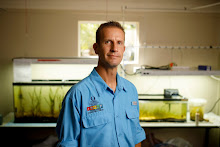
I've always wanted to try hypnosis. I finally got a chance recently when I was commissioned by the online magazine "Windsurfer International" to test the UK Olympic Windsurfing Coach's hypnotherapy method of preventing the forearm cramps caused by cold weather gloves. Did it work for me? You can check out the article at the following link:
I haven't been windsurfing lately. It's winter, it's cold, it's dark early, and I've been strongly compelled towards other worthy and less worthy pursuits. Nevertheless, I've been thinking and dreaming about windsurfing, and trying to keep up with all the windsurfing news on the Internet. There's actually more news than one person can follow, given the proliferation of windsurfing-related blogs, forums, Facebook pages, and manufacturer and magazine websites. So I focus on are the bits that I think are the most interesting, like the development of new and unusual gear. Below, I describe some of the new toys that I think look especially cool. You'll notice a predominance of longboards with daggerboards. Longboard windsurfing was an underrated part of the sport for a long time, but it has had a modest resurgence lately. I think people are realizing that on most bodies of water, most of the time, longboards perform better than shortboards. And the boom in popularity of stand-up paddleboards has made it cool again to have huge boards on top of your car.
Anyway, here are the boards:
#1- The AHD "Tactik" (320 cm x 76 cm, 250 liters) This board lacks footstraps and has a thick nose shaped like a boat hull for slicing through the water. In these respects it resembles the "Division II" longboards that were used for light wind racing in the 1980s. However, whereas the D2 boards had a boat-like hull all the way back to the tail, the Tactik transitions to a flat bottom at the tail. This allows it to "plane" and reach high speeds with the daggerboard withdrawn in stronger winds. There was a kind of similar looking board called the "Pacer" produced by Exocet in 2005, but it was a little shorter and didn't have such a dramatically hull-shaped nose. It also had tons of footstraps and a daggerboard that stuck up through the deck, making it awkward for beginners and probably limiting it's general appeal. AHD may have gone a little too far in the other direction by totally eliminating the footstraps, though. Footstraps are one of the main things that keep you from getting flipped over the front of the board and smashing the nose with the mast when you're going fast.
Sorry the narration is in French.
#2- The Exocet "RS-D2-Elite" (380 x 77 cm, 428 liters!) This board is like a longer and more extreme version of the Tactik, and it has footstraps. Its wave-piercing nose was apparently inspired by high-tech sailboats called skiffs. If the marketing schpeel is true, then the D2-Elite may be faster around a course than traditional raceboards in both non-planing and planing conditions. It's too new now to know for sure, but folks are already discussing it on the LBWS (longboard windsurfing forum).
This video is in English, but with a French accent.
#3- Exocet Windsup 11'8" (360 x 78 cm, 220 liters) This is another longboard from Exocet that hopes to achieve a seemingly impossible design goal. That goal is to be able to catch and ride waves well as a stand-up paddleboard while also being able to plane early and work as an all-around windsurfing longboard. The challenge has been that the ideal nose-to-tail curvature, aka "rocker," is vastly different for a paddleboard versus for a windsurfing longboard. A paddleboard's tail is designed to nestle against the slope of a wave, whereas a windsurf's tail is designed to minimize drag and sharply "release" the water to allow planing. Windsurfing with a typical paddleboard is fine at low speeds, but when you try to accelerate to planing speed it feels like you're dragging a dead whale behind you. Likewise, stand-up paddling a typical windsurf board is fine in flat water, but you'll have a hard time if you try to catch a wave. "Step-tail" designs try to get around that by superimposing both kinds of rocker and having a little ledge to separate them and allow water release. (See figure.)
Exocet's earlier step-tail boards, i.e. the Kona line, worked really well for windsurfing in either flat water or waves, but not so well with paddle power only. This new Windsup 11'8" is a bit wider and thinner than the Konas, and has a shallower and differently shaped step in the tail. I'm hoping it's a real winner but I haven't been able to find any decent pictures, videos, or reviews of it. If you have $1600 you should buy the one they have at Sailworld Cape Cod and let me try it.
#4- Starboard "Phantom(s)" (377 x 67 cm, 263 liters; 320 x 71 cm, 260 liters; 295 x 72 cm, 192 liters) Starboard is known for having a huge range of boards and for always pushing the limits with weird new designs. Sometimes their innovations take off, like when their ultra wide "GO" revolutionized shortboard design in 1999. Other times their much-hyped toys turn out to be white elephants, like 2003's fast but quirky "Hypersonic." Starboard went against their own short and wide trend when they were among the first windsurfing companies to introduce a new racing longboard (The Phantom 380) in the 2000s. (Longboard development had stopped when light wind windsurfing fell out of fashion in the 1990s.) Anyway, for 2012 they have a whole bunch of Phantoms. Their main one is the 377, which is designed to compete in the "International Raceboard Class" where boards can be a max of 380 cm long and 70 cm wide. It's a typical looking raceboard in all respects except that it has weird wing things that expand the planing surface of the tail. They're supposed to make the board plane earlier, which is the same effect you would get from widening the entire tail. But, unlike widening the entire tail, they don't interfere with water flow at non-planing speeds. One of the main annoyances of sailing a longboard is that you feel like you can't plane as early as you would be able to with a wider shortboard, so I'm pretty stoked that Starboard is trying to get around that.
The little brother of the Phantom 377 is the 320, which is designed to fit into the "Hybrid" raceboard class where boards have to be at least 71 cm wide and no longer than 320 cm. They say it has a real good raceboard feel and is competitive against the full length boards without being quite as expensive or hard to transport. Older longboards that were 340 cm or shorter tended to be kind of sinky and crappy performing compared to the bigguns, so I'd consider it a pretty good advance if the 320 avoids that.
The odd one of the Phantoms is the much shorter, green, 295. It's supposed to be a fun and fast raceboard for youths between 40 and 75 kg. A lot of adults are less than 75 kg, so it might interest them, too. It seems to have a less extreme version of the wings on the 377, and it shares with the 377 a "diagonal" adjustable mast track. The mast track is on a little ramp, so when you put the mast base forward for light winds it's up a little higher, and when you put the mast base back for planing, it's recessed into the deck of the board. I don't know if it makes a huge difference, but it seems like a cool idea. I think the idea of the 295 is to compete with the Bic Techno 293, which is currently the most popular one-design board for youth racing. The Bic is a decent board, but it's getting pretty dated now, and it's a good bet that the Starboard is a better performer. I have mixed feelings, though, because windsurfing is a small sport and I worry that having multiple boards try to be the dominant one-design board for youth might just destroy youth windsurfing entirely. Or not. I dunno.
#5- The Neil Pryde RS ONE (300 x 80 cm, 209 liters) Neil Pryde mainly makes sails and rig components, and the only other board they make is the Olympic Windsurfing One-Design board, the RS:X. Just like Starboard with the Phantom 295, I think Neil Pryde made the RS ONE to try to kill the Bic Techno 293. It would make sense, because the Bic Techno 293 class is currently the feeder class that supplies talented young sailor to the higher tier RS:X Olympic class. Neil Pryde would naturally want to have a monopoly on the youth feeder class as well as the Olympic class. That said, the RS ONE looks like a pretty good board. It was designed by the guys at Exocet who have a lot of experience with longboards and the somewhat wider versions of longboard that they call Hybrid boards. I'd like to try the RS ONE, Phantom 295, and Bic 293 side-by-side just to see if there's really a difference.
This is the slick promo video for the RS ONE.
#6- Patrik Diethelm Formula V2 This one isn't a longboard. In fact, as an ultra-wide shortboard for planing-only racing it's pretty much the opposite of a longboard. Though all modern formula boards are 100 cm wide at some point, this one is really taking it to the limit by carrying that width almost all the way to the nose and the tail. The tail width on this one can actually be adjusted a bit if you don't want it super wide, because it has some funky extender plates under the back footstraps. It also has plates in the cutouts on the underside the tail that you can raise or lower depending on the wind strength, water roughness, etc. And it has lots of "chicken strap" options for when you're on a screaming reach or barreling downwind and you just can't control the board from the outside back strap. Basically there's a ton stuff to geek out about on this board. Since I haven't tried any formula board newer than a 2004 I'd really like to take one of these monsters for a spin to see how they've changed.
#7- Airush ONE What is it with everybody naming their product the "ONE?" It seems a little presumptuous. Anyway, I have to apologize for this "one" because it's a kite. Yes, even though I've quit kiteboarding I still keep half an eye on what kind of new stuff they're coming out with. This kite caught my eye because it seems so practical and hassle free. It's an inflatable kite with a simple bridle and only one inflatable strut, plus the inflatable leading edge. The thick leading edge, the "D" shape, and the bridle design keep it from needing any additional struts. When I was kiting my two main complaints were: 1) the kites had too many complicated, flimsy, and self-destructing parts, and 2) the kites didn't stay in the air or relaunch off the water well in light winds. If the advertising hype for this Airush is accurate then it flies in lighter winds than any other inflatable kite and has less potential for self-destruction. It's also supposed to turn fast and be resistant to stalling, which is good if you're trying to ride waves. IF I ever get back into kiting this is the kite I would get.
This is old news now, but apparently Windsurfing Magazine has published it's last issue, ever. There is a long discussion about this sad ending in the iwindsurf forum. For my part, I'm bummed. I had enjoyed reading and learning from the mag since getting seriously hooked on the sport in 2003. It was more or less the only thing I looked forward to finding in my mailbox. I especially liked the magazine's technical advice and gear tests. I was such a glutton for windsurfing info that I actually read through a two-foot-high stack of back-issues just to see what I'd missed before I started subscribing! One can still find plenty of windsurfing information and entertainment on the Internet, but it's widely scattered among blogs, manufacturers' websites, and opinion forums, and it's just not the same as what you'd get in the magazine.
"Eh, sonny, I remember back when windsurfing had a magazine, made out of PAPER, back when we still had TREES! cough cough..."
Besides the loss of the magazine itself being a bummer, there's a concern that the event might be associated in some way with a serious decline in the sport of windsurfing. It's well known that windsurfing went through an enormous drop in popularity after it's 1980's heyday, but the general wisdom is that the number of windsurfers has since stabilized at a lower level. We can't blame kiteboarding, either, because the big corporate parent of Windsurfing Magazine just cancelled Kiteboarding Magazine, as well. The best explanation I've heard so far is that magazine readership in general is down, so the big publishers are getting rid of all their small market mags to economize. Dang. A decline in windsurfing might not have caused the loss of the mag, but worryingly, the reverse might happen now that there's not a regular magazine keeping coffee tables warm and sailors stoked. More than ever our sport is going to depend on grass-roots community kind of stuff to keep it alive. Here's what I'm going to do:
1. Keep a steadily unsteady flow of windsurfing-related material coming out at James' Blog. 2. Start subscribing to the "other" North American windsurfing magazine: Canada's "Windsport" 3. Appreciate the tiny "New England Windsurfing Journal" a lot more 4. Ask and answer windsurfing questions on the iwindsurf forums 5. Teach at least one new person to windsurf this year 6. Let folks know that even though windsurfing isn't as popular as it was in the 1980s, it's just as addictively fun as it's ever been.
Marine biologists have to work around the tides. The plus side of that is that we rarely have to be in the field for more than about 4 hours at a stretch. The minus side is that we often have to be in the field really early in the morning or late in the evening, or over weekends or holidays. This year the late fall offered no opportunities to access our seaweed experiment in Lubec, Maine... except for December 22nd - 24th. If we missed the chance, we wouldn't have another one for months, and the whole huge, multi-year experiment would be ruined. So I rescheduled Christmas with my family for later, and rallied a Jewish colleague (Michael Hutson) to help me do the seaweed stuff. It turned out to be a pretty fantastic adventure. We were successful in our scientific objectives, and being in an unusual place at an unusual time we witnessed some special things, documented in Michael's photos.
Frosted seaweeds.
Frozen mist and waterspouts over the Bay of Fundy,
I went windsurfing with my GoPro camera this afternoon, but apparently I didn't mash mash the shutter button hard enough with my gloves, because I filmed exactly nothing. D'oh! Actually, that may be a good thing for you blog readers, because I'll take the opportunity to post a video more entertaining than any I might have produced myself. From the windsurfing magazine website, here is a speedsailing session on the English seashore:
A) Seen a windsurfer do chop-hops, jibes, and freestyle on a speedboard. B) Seen a cow windsurf.
The sailing venue looks cool, too, with that uber-flat water. But I wonder if the speedsters ever mess up and smack into the rock retaining wall. Yikes!
When it gets into November in New England you'd better treasure your each and every windsurfing session. You never know which one is going to be your last for the season. I might have had mine about a week ago. It had been blowing hard from the SW all day, but had slowed down a bit by the time I got out of work and got to Josh Angulo's garage to pick up a board. On his recommendation I took an Angulo Magnum 84 slalom board with a 50 cm fin, and I rigged up my camless 8.0 Aerotech FreeSpeed sail. That was just the ticket for a well-powered blast across the flat water along the Nahant Causeway. It was a short sesh, ended by dusk around the same time it would have been ended anyway by my cramping gloved forearms. I'll be OK if it was my last session for 2011, but dang, it would sure be great to get just one more. Here's a video not from the session I just described, but from one a few weeks earlier that I never got around to posting. Nothing too extreme, but I think it fits pretty well with the music and stuff. Enjoy.
Part of my job is to do quarterly surveys of 450 seaweed plots, from the Boston area up to Northern Maine. The fall survey has taken a long time, because my usual grad student helpers have been very busy with other things, like TA'ing, studying, and working on their own labor intensive projects. As it gets later in the season it gets harder and harder to work, with shorter day lengths less likely to coincide with the low tides we need for the seaweed plots to be exposed. By some miracle, though, the cold of winter has been holding off. Last week near Pemaquid, Maine, we saw a wild rose still with green leaves and a bloom.
There are only 50 more plots to survey, but they're all on a very low-lying ledge at our Northermost site in Lubec, Maine, and it looks like the only tide that will be low enough for us to get to them will be on Christmas. Fortunately, I'm not very religious, my folks are amenable to a rescheduled holiday, and we have a Jewish lab technician who may be able to help. It will be a weird Christmas.
I'm a marine biologist working at the Northeastern University Marine Science Center in Nahant, MA.
My professional page is here.
My personal blog is here.
"Mares" brand Size Mens' Medium Pictures: back, front VERY thick and warm, with wrist and ankle seals and waterproof back zipper. Used for scuba diving in Washington State. Could work for windsurfing or kiting, but probably not flexible enough for surfing. Integrated hood has been removed above the collar so you will need to wear a separate hood or have a dive shop tailor one on for you. Have to pick it up from me in Massachusetts.