Showing posts with label douglass family. Show all posts

Sunday, October 13, 2024

Florida sandwich: SUP race between two hurricanes

Fall 2024 schedule:

1. Research and teaching at Florida Gulf Coast University
2. Hurricane Helene
3. Key West Classic paddle race
4. Hurricane Milton
5. Back to research and teaching

Life in Florida is *a lot* sometimes, in both good and bad ways. Rhonda and I have adjusted to the "downsizing" that Hurricane Ian forced on us in fall 2022, moving from a flooded then sold from under us rental house in Bonita Springs to a tiny but cute bedroom apartment in Estero. Positives include:

1. Bicycling a short distance to work and never having to worry about gas or finding a parking place.
2. Power-couple working from home vibes with two desks set up in a single room that is home office, living room, kitchen, and dining room.
3. Easy to walk the dogs within the apartment complex, nice neighbors, and a swimming pool.
4. Being at 5 meters elevation (as opposed to 2 meters) and therefore not having to worry about storm surge or freshwater flooding.
5. Rhonda discovered that there is just enough room over the kitchen cabinets to store my 14' race paddleboard, and we developed an efficient system now for getting it down and out the door, so I can paddle almost as much as I used to again.

There are some negatives, like it's a longer drive to the beach, we have no room for guests and no storage space for hobby stuff, and we can't make our own decisions about the landscaping. We're living well overall, though, and able to progress on some of our life achievement / enjoyment goals. For example, Rhonda is kicking butt with her writing and editing career, going on Disney World trips with her sister and nephew, and I am pursuing some semblance of chaotic balance of research, teaching, environmental activism, and watersports / fitness pursuits. The last month has been a particularly dramatic one, and that is the subject of this post.

It started out fairly normal: teaching and research. Fieldwork for the research has been fun. My colleague Melissa May and I are part of a team working with the Gulf Shellfish Institute to restore hard clams, aka Southern Quahog (Mercenaria campechiensis) by combining seagrass and clam restoration projects. Hard clams used to be ubiquitous in SW Florida, but they were massively overharvested in the 1960s and have been slow to recover, possibly due to loss of spawning stock. We've been diving in shallow waters and scoping out sites that currently have low amounts of clams and seagrass but could potentially be restored. In the picture below some Gulf Shellfish Institute researchers are hamming it up with a few clams we found during a site survey using the Sanibel Captiva Conservation Foundation's research vessel.

The bad stuff started with Hurricane Helene, which we were worried could be a reprisal of Hurricane Ian's devastating effects on our area. Helene was devastating for the "Big Bend" region of Florida between Tampa and Tallahasee, and almost apocalyptic as a "1000 year" freshwater flood event where my parents live in Asheville, NC.
The scariest thing for me about Helene was not being able to get in touch with my parents for days while watching apocalyptic footage of Asheville flooding, and imaginging them swept away in a mudslide somewhere. It turns out they were OK, and were able to evacuate to their beach rental house in South Carolina; an interesting reversal of the usual "head for the hills" thing you're expected to do in a hurricane.

Helene wasn't that bad for us in SW Florida, but it still managed to flood FGCU's Vester Marine Field Station enough that they had to remove drywall from where they had JUST fixed it post-Ian. The surges of Helene (and later Milton) show up well in this log from a water quality sensor deployed at the marine station by FGCU scientists.

Also, Helene flooded my paddle friends Justin and Bill's houses on the Imperial River and derailed their plans to attend the last ever Key West Classic paddleboard race. And it majorly resculpted the beaches and "sanded over" beach parking lots. I feel bad for whoever's cars and trucks these were that didn't get moved out of the Bonita Beach parking lots before the storm.

Some of the old Bonita Springs paddle racing crew were unaffected enough by Helene that we were still able to attend the Key West Classic. I drove down with Cindy Gibson and we met Meg Bosi and John Weinberg there, along with a bunch of other paddle racers from around Florida who we've gotten to know over the years.

Hawaiian style blessing before the 2024 Key West Classic.


For the race I'd been thinking about bringing my WIDE 14x27.25" Fanatic Falcon, but I didn't have the wherewithall to get it out of post-Ian storage at my buddy's house before the mess of Helene. So I ended up going with the beat up 14x23" Riviera RP that lives on top of my cabinets. The narrow Riviera board was perfect for the north side of Key West, where the water was flat in the lee of the south wind, but it was almost impossible to balance on the board on the wickedly choppy south side of Key West, where a residual wind and swell from Helene was bouncing off the cement seawalls. I especially suffered in in the final segment of the race where I kept falling and falling and was eventually passed by my most closely matched competitor Travis Kindt. Almost everyone else was also having balance issues, though, and many stand up paddleboarders ended up sitting down or kneeling on their boards to finish the race. Once the "sitters" were disqualified I actually ended up in third place, after Jake Portwood and Travis Kindt. My time was 3 hours 11 minutes, which is about 45 minutes longer than my best time from years past. Cindy won first place in the 12'6 board class and first place overall for the women, rounding in front of a bunch of younger women on 14' boards.

Jake Portwood first SUP finisher.


Me limping over the finish line.


Cindy Gibson finishing strong.


Meg Bosi.

After the race we ate good food and did a bunch of touristy stuff in Key West. Ernest Hemmingway's house was worth the money and the Key West graveyard, with all kinds of history, flowers and feral chickens and iguanas running amok was neat.

We didn't get much rest after Helene and Key West before the next hurricane loomed: Milton. With a more southerly track than Helene, it looked like it could be extremely bad for us, and maybe a "worst ever" scenario for Tampa Bay. As it was, the track kind of "threaded the needle," coming ashore just south of Tampa Bay and not causing much storm surge there, while being far enough north of my area that our storm surge was only a little bit higher than Helene's was. There were scary tornadoes across the whole state as Milton was approaching, though, for which Rhonda and I had to hide in the bathroom with our dogs. It also flooded FGCU Vester station ABOVE the line where the soggy new drywall had just been removed after Helene. Ugh. Bill and Justin's river houses also flooded again, significantly more so than in Helene, so they are in hell still. Areas north of me but south of Tampa Bay, like Venice and Sarasota, got it worst, with major surge, wind damage, and basically total devastation of the barrier islands and low lying areas.

I know I shouldn't get in the water after hurricanes, since it's like, 90% sewage and toxic waste, but yesterday Cindy and I carefully paddled through the backwaters from Bonita Beach road to Wiggins Pass State Park to check out the scene there. Interestingly, all the ingredients of nature: trees, sand, shells birds, fish, etc. are still there, just in significantly different arrangements. The parking lots of the state park are totally obscured under new sand dunes, and what once were forests are now roots and tree stumps awash in the Gulf of Mexico.


People keep talking about "build back bigger and stronger" but I think we need to be a little careful about how we approach that. In my opinion, we really shouldn't be building stuff that's supposed to last a long time on beaches and barrier islands. These areas move and shift around a lot, even when sea level isn't rising, and sea level IS rising (about 3.57 mm/yr in Fort Myers according to the NOAA gauges there). Besides the upward creep of sea level rise, another thing making us more vulnerable is the increasing temperature and "oceanic heat content" of the Gulf of Mexico, which is like rocket fuel for hurricanes. The gulf has been record hot for the last few years, and was 2-3 degrees Celsius warmer than normal for these last two storms, contributing massively to their convective winds and precipitation. Big, destructive hurricanes won't be hitting us EVERY year, but they're definitely going to be hitting harder and causing more surge and flooding than they did in decades past.
Between Helen and Milton my geology / meteorology colleague Dr. Joanne Muller gave a killer talk about hurricanes and her efforts to account for their changing impacts over time. Proud to be part of a scientific community that is looking at the science and economic impacts of storms with clear eyes.
Dirt roads, parks with hiking / biking trails, simple beach access areas, maybe some campgrounds; those are the only kind of human use things that I think really make sense for beach front and barrier islands of the Gulf.

Sunday, October 16, 2022

Hurricane Ian personal story

Hello friends, family, and windsurfing- and science-curious strangers who happen upon my blog. I'd like to take a moment to tell the story of my personal struggles with big, nasty Hurricane Ian, which ravaged SW Florida even more so than Hurricane Irma of 2017. I'll tell the story in phases.

Phase 0: Before the Hurricane.
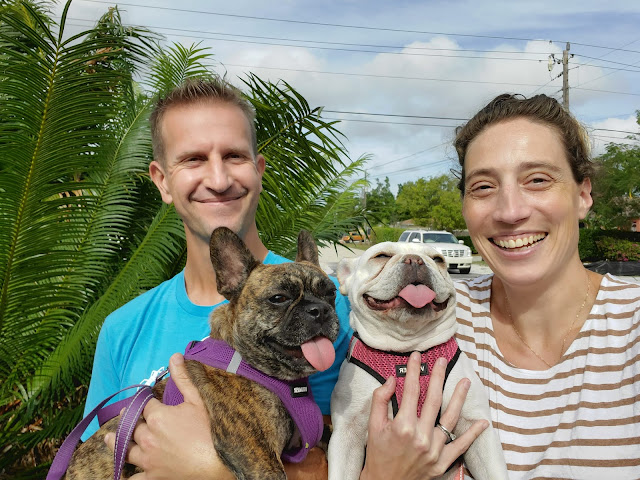
Prior to Ian, 2022 was going pretty well for Rhonda, myself, and our French bulldogs Petunia and Violet. I was busy with my job as a marine biologist at Florida Gulf Coast University- teaching classes, advising graduate students, and doing some fun research using scuba diving to study the effects of coastal pollution on underwater habitats offshore of Lee and Collier Counties. Rhonda was busy writing a new speculative fiction novel and working part-time as a store clerk at the HomeGoods down the street. We were looking forward to Rhonda's sister and nephew visiting.

Phase 1: Weather Watching
Up until September, the 2022 Western Atlantic Hurricane Season had been pretty dull. But it got spicy quick, with Hurricane Fiona becoming a big baddie that walloped Puerto Rico, the Dominican Republic, and even Nova Scotia. Hurricane Ian then took the stage, moving west through the Caribbean as a tropical storm then strengthening and turning north, with the western tip of Cuba and the Gulf Coast of Florida "in the cone." The early forecasts had it hitting somewhere north and west of us; Tampa Bay looked imperiled, but the Fort Myers / Naples area not so much. I cancelled my lab's plans to do scuba diving research, though, because the Gulf would be too rough and our crew would need to be making hurricane preparations at the university's Vester Marine Field Station. Rhonda had to cancel her sister's plan to visit. I got increasingly nervous while looking at iWindsurf.com forecast models which showed our coast getting a sustained beating from the onshore winds on the south side of Ian's counter-clockwise rotation. This was a scenario I'd also worried about when weather-watching Hurricane Irma- A storm offshore in the gulf can be more dangerous than one passing directly overhead, because of the way the onshore wind field can build a massive surge. Irma had caused major storm surge in the Florida Keys, but because it then then came due north over land it caused "only" wind damage and rainfall flooding in SW Florida. Ian, with a potential approach from the Gulf, looked like it could deliver the surge that Irma had only threatened. By Sunday the 25th some of the models and warnings coming out the National Hurricane Center were making it look really scary for us, fleshing out that storm surge from the gulf scenario. The NHC has a model now that can show a high-resolution, color-coded map of areas that may be inundated. The house we rent in Bonita Springs is only about 2 meters above mean sea level, and its near the tidally-influenced Imperial River; a water highway that can would conduct storm surge from the Gulf of Mexico, through Estero Bay, into my living room. So naturally it was flooding in those models, and each time I checked, like between teaching classes on Monday, it looked worse.

Phase 2: Evacuation
Work/school was cancelled for Tuesday the 27th, and a mandatory evactuation was ordered for low lying parts of Lee County that morning. In retrospect, the evacuation order should probably have come earlier. This is something that has become a major controversy in the hurricane's aftermath since so many people ended up dying in the storm who might have evacuated had the order come earlier. As it was, Rhonda and I had to scramble to make our evacuation plans, picking which of our friends or family outside of the hurricane's path we would choose to burden with ourselves and our not-quite-potty-trained dogs for who knows how long. Ultimately we decided that Valerie Dinsdale, our long time family friend who knows lives in Palm Beach Gardens in East Central Florida, was who we would crash with. We actually kind of dallied around our house on Tuesday morning the 27th, figuring we'd drive over later in the day and wanting to enjoy our coffee and not unplug our computers and stuff right away. In retrospect we should have dropped everything and frantically moved all precious things to the highest shelves and stuff. By the time we did get ourselves, our dogs, our dog beds, dog crates, dog pee pads, dog food, dog leashes, dog medicines, and other important things we didn't want to lose in a flood like our birth certificates and social security cards, loaded into the car, it was 6 pm or so and already raining hard. On the drive across the state we took back roads and avoided traffic, but the weather was hellacious, with our phones buzzing every five minutes with more emergency warnings of tornados, flooding, etc. etc.

Phase 3: At Valerie's
Despite getting drenched bringing stuff in from the car at Valerie's house, and struggling to get the dogs properly quarantined in her laundry room, we felt a lot of relief to be out of harms way. Valerie never lost power, so the next day we had a front-row tv and computer seat to the tragedy and destruction unfolding on the west coast of the state. I got intermitent text reports from my neighbor who had stayed home, and they were not encouraging. "Everything is floading." "We are evacuating." And later, "There is a tree on your house." You've surely seen the news reports so you know: it was BAD. As predicted the storm surge reached our house, and it was more than a foot deep around the outside based on the line left on the wall. We were anxious to return to see the damage and attend to the house, but we knew we couldn't go right away because we wouldn't have a safe place to keep the dogs air conditioned and cool. (Because of their brachycephalic heads and constricted air passages, bulldogs can't keep themselves cool in hot weather and they easily die of heatstroke. Rhonda and I still feel terrible about her English Bulldog Buri who died that way on the the 4th of July 2012. We think the Buri-spirit supported our decision to hang out with Valerie for a few more days.)

Phase 4: Coming home, sort of
I honestly don't even remember what exact day we left Valerie's, but it was a shit day. We had found an animal hospital open less than an hour from our house in the town of Labelle, so our plan was to drop the pups off there, then clean the house up and retrieve the dogs from boarding once we had power. The plan was derailed because it turned out that the "animal hospital" in Labelle was a squalid nightmare based out of an old schoolbus and damp, falling-down trailer, which reeked of mold and feces and of course had no power. So after a tense marital discussion we determined that we would travel to our home for just a few hours, keeping the dogs in the shade or in the air conditioning of the car, then Rhonda would return with them to Valerie's and I would stay in the house to do whatever I could to salvage things and make it habitable. Arriving at the house we could clearly see the black smudge of the high water line on the outside, and it was more than a foot up, pretty discouraging. Inside it was nasty and wet, but our forensic work indicated that the water inside had only reached about 10 cm / 3 inches deep. 10 cm was enough to ruin any water-absorbent thing on or low to floor. So that was all the upholstered furniture and the lower shelf of the bookshelves and filing cabinets, but thankfully not the bed, the futon, or the dressers that were on legs. The stench inside was a horrendous mix of rehydrated dog pee, sewage, leaf litter, mildering clothing, and wet drywall and insulation. We hurriedly mopped up the standing water in the low spots of the floor and started moving ruined things out to the curb, then moving possibly saveable things to the covered lanai area. Rhonda and the dogs left and I spent my first night sweating with windows open and no covers on atop the bed surrounded by an epic mess. The next day or so was all about moving stuff out, boxing up dry things that there were no longer shelves for (got a million giant tupperware things from the hardware store), jury rigging a window unit AC and dehumidifier on a generator with help from my work buddy Serge and Rhonda's cousin Mike. Concurrently I was in frantic negotiations with the landlord to see what to do about the wet drywall, which becomes an epic mold problem if not removed soon. I got the go-ahead to remove it, and got some tips from my paddle buddy Matt Kearney on how to do so. One of the worst things was just drawing the line around the entire house at exactly 26" high, which is tricky when you're moving things which have no place to go, crawling around like a mole inside closets, etc. I forgot to wear a mask the first day of drywall removal so I'll probably die of asbestosis, but I wore a mask after that. The one good part of those hell days of all work and no electricity was meeting and bonding with a bunch of my neighbors that I hadn't really known before. As messed up as my house was, I was actually among the lucky ones, since a lot of folks closer to the River or bay had head-high water in their homes and lost everything inside. Worst of all, of course, were the folks who lived near the open coast whose entire houses were knocked down and swept away. It does make one question the wisdom of rebuidling in some of the lowest, most coastal areas. I'd like to see folks find ways to turn those areas mostly into public parks and beaches.

Phase 5: The lingering nightmare
One horrifying discovery when removing the drywall, along with the spiders, roaches, piles of lizard eggs, pine straw rat middens, and actual TOAD under the sink, was that an addition to the house had tons of pre-existing rot in the walls from where the roofs of the new and old part of the house weren't mated right and water got in. You know the rot is bad when you can actually vacuum up boards like wet coffee grounds with the shopvac. It's like, if I ever wondered why my rent was cheaper than average, now I knew. The horror of the mildew and stuff abated once everything was dried and out and vacuumed out and bleached and carted to the mountain of house guts on the curb (matching the mountains of house guts all down the street, and in every adjoining neighborhood, for miles and miles), and the power came on and Rhonda and the dogs were able to come back. But it's still unsettling living in this frankenhouse where the dogs can run freely from any room into any other and we don't know if the landlord is ever going to fix it and wonder if we could afford a different place. My pay has gone up about 10% since I moved here in 2012, but the average rent in town is like 2 or 3 times higher than it was. Cherished luxuries I've enjoyed, like having a shed for windsurfing boards and water within walking distance to go paddleboarding in, are things I maybe shouldn't have taken for granted. Although I'm not sure the "water nearby" thing is the unqualified perk that it initially appeared, especially with the sea level rising and stuff.

Phase 6: Life goes on, and science
October 10th was my first day back at work at FGCU, with a full schedule of classes and all the usual stuff, plus a lot of hurricane talk and catching up. I had 276 unread emails on the first day- yikes! One of the important things in those unread emails was that my scientific collaborators on our EPA-funded SW Florida shelf research project had arranged an alternate strategy for getting our October sampling done despite our marine research station being trashed. That alternate way is a 7-10 day cruise onboard the Florida Institute of Oceanography's boat, the R.V. Hogarth. We leave from St. Petersburg Tuesday. I should have internet so I'll try to do some posts of our scientific findings. We'll also have a reporter and cameraman onboard from SW Florida's Wink News. We expect to find a lot of murky, polluted water, and possibly some nasty knock-on effects of all the pollution and rotting material that has been injected into the Gulf; effects like algal blooms and oxygen depletion smothering sea bottom life.

Saturday, December 25, 2021

Merry Christmas 2021

 Whew, it has been a real busy last 8 months or so of life. Lots of exciting but stressful work, spiced up with some unexpected challenges, anxiety about the coronavirus pandemic, environmental disasters, etc. Nevertheless I have a lot to be thankful for. Number one is my wife Rhonda, seen here where we're celebrating Christmas at her family's home in New Hampshire. 


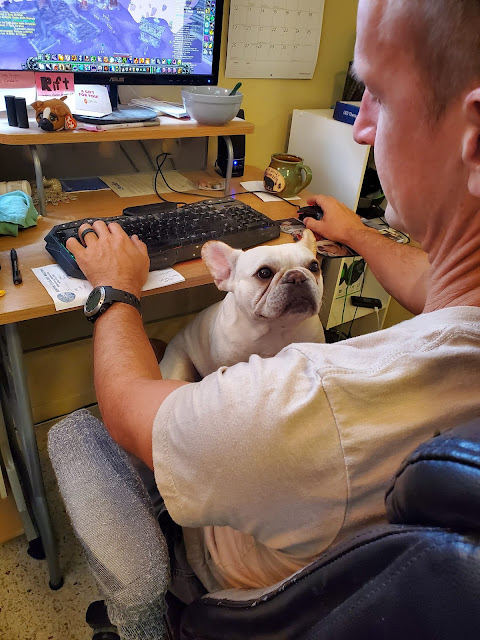
I'm also thankful for our new dogs- little french bulldog rescues Violet and Petunia who are a lot of work but super loving. Here Petunia is in one of her favorite spots, sitting in my lab while I play computer games. Those EYES! <3 


And here's one with the whole gang together. 


Tuesday, August 14, 2018

Edisto Island Windsurfing & New Surfski

I started the summer of 2018 with a trip to my folks' beach house in Edisto Island, South Carolina, and I'm pleased to be ending my summer with another Edisto trip. This time it's extra special because my sister and nieces are here, along with my science and nature loving aunt and uncle.

I arrived here Sunday with my minivan loaded with water toys: my windsurf stuff, plus a new surfski kayak. The surfski kayak is a Stellar SR, 584 cm long x 48 cm wide. It replaces a 640 x 43 cm Epic v12 surfski that I decided was too advanced for me and not shaped right for my bum. The Stellar SR is a bit slower in flat water, but faster (for me) in rough water by virtue of I'm not wobbling and capsizing it all the time.


I've found the Stellar SR really enjoyable to paddle in the choppy Atlantic ocean here. Today I convinced my dad to drop me off on the other side of the island so I could paddle out into the ocean with the ebb tide current pushing me, then turn and paddle downwind with the swells to the beach in front of our house. It worked really well and I was able to get the fastest average speed I've ever gotten for a paddling session of any kind. Woo hoo!


After paddling I played on the beach with my nieces for a while, then swapped out the surfski for my windsurf. A 6.8 sail and 106 liter Exocet Cross with a 32 cm MUFin NoSpin fin were perfect for blasting around in the steady 15+ kt conditions. The track below is from a similar session on the same gear on Monday night.


I'm not going to want to go back to work after this.

Monday, May 14, 2018

Race Report: Edisto Island Classic


Race: The Edisto Island Classic 2018

Date it happened: 12 May 2018

Location: In the saltmarsh creek backwaters of Edisto Island, South Carolina, starting at the Edisto Beach State Park boat ramp.

Course / Distance: There was a long race and a short race, both following the same out-and-back path through broad, tidal creeks. I GPS'd the long race at 7.9 km, and I reckon the short one was about 5 km. I'll post my GPS track when I get back to a computer with a usb bluetooth dongle.


Conditions: It was hot and sunny, with a slight breeze that picked up during the race. There was a strong ebb tide current at the race start, but the current diminished as slack low tide approached by the end of the race. A few places on the course were shallow. The area requiring the most care was the steep concrete boat ramp where we entered and exited the water. There were some minor injuries and embarrassments there.

Participants and Gear: There were around 58 participants, relatively evenly divided between the short and long races. About 1/3 of the participants were on SUPs, and the rest were on kayaks or outrigger canoes. I was surprised how many serious, surfski kayak racers showed up. Kayak racing must be more popular in the Carolinas than in Florida. As a new surfski paddler it was interesting for me to scope out the other racers' "skis" to see the differences in design that I hadn't paid attention to before. I realized there's quite a difference between the relatively flat bottom shape on a stable surfski like the Epic V8 as compared with the U-shaped bottom on a tippy one like the Epic V12. (Now I know why I'm having such a hard time learning on the V12.) One of the race organizers was paddling a weirdly modified surfski that had a gull-wing "training wheels" outrigger setup. It hovered out of the water most of the time but would prevent capsize if it touched down. My setup was a 14'x23" Riviera RP with a Riviera Bump 7.0 paddle. There were only a handful of other guys in the 14' sup class, but they all looked pretty fit and experienced, with fast equipment. There was an amusing moment when Ken Bowman and I met each other in person and both admitted we'd checked out each other's results and profiles on PaddleGuru. (Gotta size up the competition!)

Results: In the long race, the top 3 finishers were in surfski kayaks- Pete Green (0:36:37), Bruce Poacher, and Larry Dixon. Justin Schaay and his daughter were in 6th place overall in their tandem surfski. Anne Kelly was the first solo female surfski in 0:47:26. I was the first SUP finisher, with an official time of 0:47:44, though I think my actual time was around 0:52:34. Ken Bowman was second SUP, Ernie Eller third, and David Jeffcoat 4th. Jeff Hood and William Dion were the first OC2 and Krista Wilson was the first OC1.


Play by play: The race organizers anticipated the difficulty of staying behind a starting line while being swept forward by a strong current. Thus they arranged a start facing upcurrent, with a short upcurrent sprint followed by a hairpin buoy turn that would send us downcurrent into the longer portion of the race.

It was clear that the marsh shoreline had less current than the center of the channel, so the savvy racers bunched at that end of the line. It was controlled chaos as we all sprinted off together. Ken Bowman and I started well and I inched into his side-draft to stick with him and save energy. Moments later we were passed by a wave of surfskis who had better speed than us but hadn't accelerated as quickly. I slipped into their wakes and used their energy to help me get to the hairpin turn before Ken. Nobody had articulated any rules about not drafting, so I reckoned it was a free-for-all. Heading downriver I briefly drafted the surfskis. I was too slow to keep up with most of them, but there was a prolonged period where the slower surfskis were gradually overtaking me, and I would draft them for a while when I could.

After the first downcurrent leg, we turned into a different channel and went upcurrent. I employed the side-hugging strategy again. The bank dropped off quickly in most places, but some spots, especially around bends in the creek, I ran afoul of shallows that reduced my speed. The surfski paddlers call the drag-inducing shallows "suck water." The lead OC2 team was creeping up on me as we headed into the shallower, bendier section of the course, but I think they were more affected by the suck water than me. I could tell I was getting ahead of them as the sound of their grunting signals to each other faded out.

I didn't know where Ken Bowman was until the turnaround at the halfway point. I was relieved to see that he was 100 m or so behind, giving me some room to breath. For the second half I tried to paddle efficiently while maintaining a strong pace. It helped that the wind and current were at my back for most of it. I gained some distance on Anne Kelly when she stuck the nose of her surfski down the wrong channel. I very briefly drafted her but she wasn't having it and pulled ahead. In the final upcurrent leg to the finish I tried to keep pace with Anne by taking a route closer to the bank while she was more in the middle of the river, but she kept the lead.

It was delightful to cross the finish line as the first place SUP with my parents and aunt and uncle cheering from the dock at the boat ramp. Then dunking myself cool in the muddy creek was also nice. Here's my track from the race:

After everyone finished we made our way to Edisto's "Dockside Restaurant" where we had lunch on a covered pier over the water while the organizers did the raffle and awards. The trophies were made of driftwood debris topped with marsh grass baskets woven by a local Gullah artist. My mother is nuts for decorative baskets, so I was happy to give the award to her as an early mothers' day present.

I hope this race continues in coming years. It has a good, family feel, it's in a beautiful, quiet spot, and it's a great excuse for me to drive up for a little vacation at my folks' Edisto Island beach house. When we're not here you can rent the house yourself. https://www.atwoodvacations.com/vacation/rentals/239-dragonfly

Monday, January 22, 2018

Race Report: CGT Winter Series #2


Race: The second race in the CGT Winter Series.

Date it happened: 21 January 2018

Host: CGT Kayaks and Paddleboards, which you can become a groupie of by joining the CGT Tribe facebook page.

Location: Riverside Park on the Imperial River in downtown Bonita Springs, Florida.

Course / Distance: For this series there are two courses: a short one that goes downriver to a buoy and back (2.9 km), and a longer one that goes downriver to the US 41 bridge and back (6.4 km).

Conditions: The weather was pleasant, with the morning air about room temperature, and a moderate East wind blowing. The river level was at least as low as in race #1, which is to say it was low enough to increase board drag and hit the paddle on the bottom in places. The tide was ebbing, with a current speed of 0.85 kph according to my paddling in current calculator. The wind, in the same direction as the current, made the upriver leg tricky.

Participants, Results and Gear: There was a good turnout (18 racers) including some less-frequent racers, such as young Sarah Weyenberg and Ellery Winghart. There were no outrigger canoes this time, but Murray Hunkin and Justin DiGiorgio used racing kayaks, and Penny Kappler used a recreational kayak. Mark Athanacio sat this one out to rest up after a long time-trial around Lovers' Key yesterday. My parents were in town because we were all at a family friend's wedding elsewhere in Florida on Friday, so they and my wife Rhonda were cheering from the shore.


As far as results go, Murray was first overall, I was the first 14' SUP, and Cindy Gibson was the first 12'6 SUP. Here's the full results with times:

Racer ** Class ** Model ** Course ** Time
Murray Hunkin ** K1 Kayak ** Assassin ** 6.4 km ** 0:38:01
Justin DiGiorgio ** Surfski Kayak ** Nelo 550 ** 6.4 km ** 0:38:30
James Douglass ** 14' SUP ** 23-wide Riviera RP ** 6.4 km ** 0:42:50
Gregory Zasinets ** 14' SUP ** 24.5-wide Starboard Allstar ** 6.4 km ** 0:44:33
Matt Kearney ** 14' SUP ** 23-wide Starboard Allstar ** 6.4 km ** 0:45:42
Bill Mussenden ** 14' SUP ** 23.5 Hovie GTO ** 6.4 km ** 0:46:02
Phil Trudgeon ** 14' SUP ** 25-wide Riviera RP ** 6.4 km ** 0:47:14
Cindy Gibson ** 12'6 SUP ** 25-wide Hovie ZXC ** 6.4 km ** 0:47:15
John Weinberg ** 14' SUP ** 25-wide Riviera RP ** 6.4 km ** 0:50:11
Sarah Weyenberg ** 14' SUP ** 24.5-wide Starboard Allstar ** 6.4 km ** 0:50:22
Donna Catron ** 12'6 SUP ** 26-wide Bark Vapor ** 6.4 km ** 0:54:20
Ellery Winghart ** 12'6 SUP ** 27-wide Starboard Allstar ** 6.4 km ** 0:57:37

Tom Trudgeon ** 14' SUP ** 27-wide Riviera RP ** 2.9 km ** 0:22:16
Meg Bosi ** 12'6 SUP ** 25-wide Bark ** 2.9 km ** 0:22:30
Jared Hamilton ** 14' SUP ** 27-wide Riviera RP ** 2.9 km ** 0:24:04
Penny Kappler ** Rec Kayak ** ?? ** 2.9 km ** 0:25:30
Saralane Harrer and dog ** 12'6 ** 26-wide Riviera RP ** 2.9 km ** 0:28:35

Play by play: The first group to start was Cindy, Sarah, and Ellery. Sarah is a good amateur racer from the midwest, and she looked serious today wearing a heart rate monitor and paddling a fast Starboard AllStar. I think Cindy knew she had tough competition because she blasted off at the start and paddled faster than ever for the entire race.

I lined up in the second group with Greg, Matt, and Bill, all fast dudes on 14' boards. I was on the south side of the river next to Greg. That was good because Greg is almost as fast as me but he can't or won't draft. I figured having him next to me, then hopefully behind me, would prevent anyone else from getting a free ride on my wake. I sprinted hard off the start and got in front of Greg, then maintained a nearly-sprint pace for a while to put a gap on Matt, who is a good drafter. I bobbled a bit going over a submerged object, which I later learned was a stick that had gouged the bottom of my board. Doh! I didn't fall, though, and after about 800 meters it looked like I had escaped all the potential drafters.

After that my race was relatively uneventful. I had a brief moment of drafting Justin and Murray as they passed me in their fast kayaks, but of course I didn't have the speed to stay in their drafts. Shortly after they passed me, I caught up with Sarah Weyenberg, who was only a few board lengths behind Cindy. They were both going fast, so it took me a while to get around them. That first leg of the course was quick with help from wind and current. The second leg, after pulling a u-turn around the pilings of the US 41 bridge, was harder. It was a tough choice between hugging the shore to escape the wind and current, or staying in the deeper water of the mid-river to avoid the drag-inducing effect of the shallows. Hurricane Irma moved a lot of sand down from upriver last summer, so it's shallower with more sandbars downriver, possibly making the course slower than in previous years. I put too much stock in avoiding the current this time, and not enough into avoiding the shallows, which contributed to my time being 38 seconds slower than in race #1 despite a pretty hard effort.

Here's my GPS track from the course:


Greg appeared shortly after I finished, alone, having shaken Matt off his draft around the bridge. Greg is best known for being a downwind paddling expert, but he's obviously tough in these flatwater grinds, as well. Matt was about a minute behind Greg. Cindy was safely ahead of Sarah, having extended her lead in the tough upriver leg. Though my race time was slower than in race #1, some others had faster times. Cindy and Bill Mussenden were both about a minute faster, Phil was 30 seconds faster, and Justin was 39 seconds faster despite hitting the same stick I hit and flipping his kayak right before the finish line. We are all happy that Justin is alive because he had a big scare in a downwinder paddle on the ocean during a cold front last week.

After the race we had good eats in the shop at CGT, and talked about whether or not we want to do a crazy treasure hunt race that RedBull is sponsoring in early February. It's located in the remote waters around Cape Romano (where the dome homes are) and it sounds like a logistical boondoggle where a lot could go wrong. I'll probably sit it out unless somebody twists my arm.

Another cool thing that happened after the race is that I got to go on a leisurely SUP cruise with my 73 year old dad and 70 year old mom. My dad has been reluctant to try SUP in the past, and he was wobbly at first this time, but he ended up doing fine. My mom was zooming all over the place on a raceboard. Next time she visits I'll encourage her to do one of the races. Also, we saw manatees.

Saturday, October 7, 2017

(Belated) Hurricane Irma Story


Hurricane Irma passed directly over my town of Bonita Springs, FL on September 10th 2017 as a category 2 or 3 storm with winds in excess of 160 kph and ~30 cm of rain. It was a big deal. Some people lost everything. I was lucky to suffer little more than the disorientation of a 1.5 week “pause” in my life. This is my Irma story.

Phase 1: Weather watching- I have loved weather-watching and weather-hoping since I was a kid in Washington State. Back then my psychic efforts were concentrated on hastening the arrival of spring and summer sunshine, particularly willing the waters to warm to swimmable temperatures, and, in the winter, wishing the rain to turn to school-cancelling snow. When I got hooked on windsurfing as a young adult, the weather-watching centered on wind. I also began to mix science with my wishing. I would pore over the iwindsurf.com forecasts and sensor readings, and carefully strategize which beach to go to at what time to catch the best combination of wind strength and direction, tide level and flow, etc. Having by then moved to the East Coast of the US, I also started paying attention to tropical storms and hurricanes, which regularly influenced the weather of Virginia. Most of those brushes with storms in Virginia were harmless windsurfing fun, but Hurricane Isabel of 2003 was a category 1 direct hit that really messed up the Virginia Institute of Marine Science where I was studying, and left the area without power for several days. I regretted my decision to storm-watch from VIMS’ waterfront campus after my car window was smashed out by flying debris. Where I live now in Florida, hurricanes and tropical storms are the only kind of weather that’s interesting, so you can bet I do a lot of hurricane tracking and speculating, largely at the site wunderground.com, which has a good science blog discussion section along with their severe weather reporting. One of the things that concerned me this summer was how incredibly hot the water temperatures were in the Gulf of Mexico, much of it over 30 degrees Celsius. That’s hot enough to make you sweat while you swim. Hotter ocean waters give more energy to strengthen the winds and rains of tropical storms. The sea surface temperature “anomalies” (how much hotter or colder it is than normal) were skewed remarkably hotter, a trend becoming the new normal around the world, no thanks to man-made global warming.

The climate change stuff was definitely on my mind as I watched the terrible destruction brought to Texas by Hurricane Harvey. Then, before Texas had even dried off, a new storm developed in the Eastern Atlantic with a projected track that put Florida in the bullseye: Irma. I watched Irma get bigger and stronger, but thought it likely that she would curve out to sea; that the early track forecast of a direct impact to Florida would be wrong. However, each day the storm was stronger, and closer, and the westward track of Irma was narrowed the “cone of uncertainty” on South Florida. Remembering how beat up I’d been by category 1 Isabel in 2003, I wanted nothing to do with category 4 or 5 Irma.

Phase 2: Evacuation planning- It was hard to concentrate at work during the week of September 4-8, as I wondered whether, when, and where to evacuate. It didn’t seem like any of Florida would be a good place to go, since the whole state was in the “cone,” and even places not in the direct path of the storm would likely lose power (and precious air conditioning) for days. We considered two types of evacuation- 1) a short hop to more inland and northerly location in Florida, like a hotel in Orlando, or 2) a long journey to my parents’ house in Asheville, NC. Pros of the short evacuation would be less driving, and less time away from normal life if the hurricane damage turned out to be minor. Cons of the short evacuation would be finding a place that could take our dog, the expense of the hotel, and possibly needing to move again if our house was unlivable after the storm. Also, our geriatric bulldog-mutt Grace could suffer and die in a non-air-conditioned environment, so we needed the evacuation spot to be a guaranteed-cool place that we could afford to stay for a while. That argued strongly for Asheville. Thankfully, Florida Gulf Coast University (my employer) cancelled Thursday and Friday operations, which gave us plenty of time to make the long drive to NC before the bad weather. Rhonda and I packed up Wednesday night after my last class at FGCU (only three students attended the class), and prepared to leave early Thursday morning.

I was queasy thinking of how vulnerable our little rental house was: Lousy old windows that the wind whistles through. A poorly anchored aluminum shed in the back, leaned against a mahogany tree with branches enveloping the power and cable lines from the street. A decaying detached screen porch half-wrapped in Bougainvillea and Virginia Creeper vines. A palmetto palm tree that grew up too close to the house with its stiff fronds batting at the gutter and eaves. Towering pines and ungainly Ficus trees in the adjacent lot. I was fairly sure that the shed and screen porch would be destroyed by the wind alone, and that the house windows would break or leak enough rain to rust the electronics and rot the walls and furniture. I also thought it likely that all Rhonda’s fish would die and stew in their aquariums, even if the storm missed us. Wanting to get out on Thursday we didn’t have much time to prep the house. We didn’t board up windows or doors, but we did move the outdoor furniture into the shed, took the desktop computers to a friend’s safer house, and shifted a few things up off the floor and away from the windows. At the last minute, after sunset Wednesday night, I decided to hack all the fronds off the palmetto palm so they couldn’t bang into the eaves. While I was doing that I forgot to move the expensive gas barbeque grill into the house.

Phase 3- Evacuation. When we left at 6:30 am Thursday morning, all we had with us was our laptop computers, a box of personal identification documents, a week’s worth of clothes and toiletries, and the dog and her food. We drove Rhonda’s car, and left my “sport utility” minivan in the driveway stuffed with my windsurfing gear.


Leaving it all behind, was actually a kind of relief. I felt as if I had already said goodbye to the material things, and knew that the most precious pieces of my life were in the car with me or at our destination in Asheville. The adventurous feeling of escaping kept my mood more positive and energized than it would normally be on such a long drive. I enjoyed watching the natural scenery change from perfectly flat with tropical vegetation to gently-rolling with oaks and pines. At the same time the cultural scenery changed from “uniquely South Florida” to “kind of like the rest of the rural South”. It was nice to trade driving duties with Rhonda, and to make lots of little rest stops with the doggie. At those stops, and soon on the roads, as well, it became plain that we were not the only people evacuating from Florida. It was a dog and human ZOO at every gas station and McDonalds.

Traffic was slow between Tampa and Gainesville, and fairly excruciating from there into Georgia. After 16 hours on the road, in the dark of night, we were gridlocked well south of Atlanta. It looked grim and we debated stopping for the night. However, a turn onto the backroads opened up uncrowded territory, and we pressed on into a hilly land of big trees and small towns that was beautiful by moonlight. A Redbull caffeinated energy drink helped me stay awake for the last few hours through the northwest corner of South Carolina and into the western mountains of North Carolina. Finally, at 5 am, we pulled into my parents’ Asheville driveway and stepped out into the shockingly chilly September night air.

Phase 4- Asheville. My parents moved to Asheville from Washingon State a few years ago, but somehow I had only ever visited them at Thanksgiving and Christmas. So when I finally woke up it was a delight to see the scenic mountain town with all the green leaves on the trees and the pretty flowers blooming in my mom’s garden. Of course it was also great to see my folks, and my biologist Aunt Mary Garland and Uncle Tom who live in the same neighborhood. My dad had a heart attack earlier in the summer and has been on a strict “Ornish” diet and lifestyle program since then to get his weight, cholesterol and blood pressure down.

Dad making Ornish balls.


Apparently this Ornish thing is the only diet and wellness practice that has been scientifically studied and determined to actually clean out (rather than merely stabilize) clogged arteries. Old Johnny Douglass was looking studly and svelte for a 73 year old, and was in great spirits for a guy forbidden from eating any of his former favorite foods like BBQ pork and chocolate sundaes. I am extremely proud of him for sticking with something so difficult, and delighted that he’s doing something that greatly increases his chances of being alive and healthy for a good while longer. Rhonda and I went to Johnny’s “graduation” from his Ornish support group at the medical center, where we met some nice people who had also been prescribed the drastic lifestyle change at the same time as my dad. The graduation was an Ornish luncheon, some parts of which were wholesomely delicious and other parts of which gave me a greater appreciation for the adherents’ commitment to the program.

Some just-for-fun stuff that we did in Asheville included great walks and hikes in the mountains. I was especially stoked to drive to the high elevation areas along the Blue Ridge Parkway that are closed off when I normally visit in the late fall and winter. We even went to the highest spot of all, 2037 m Mount Mitchell, the highest point in the eastern United States. Above 1600 m elevation in the southern Appalachian Mountains there is a shift from familiar eastern deciduous forests to unique evergreen spruce and fir forests similar to those found far to the north in Canada. I had never been in that elevation zone before, and I found it remarkable to be bundled for warmth and surrounded by dark green fir trees in summer in a southern state. Mary Garland explained that one of the reasons Mt. Mitchell was so tall is because it was made of exceptionally hard rock, which had resisted erosion while the softer portions of the ancient Appalachians had worn away over the hundreds of millions of years since the Ordovician period.


A pensive moment atop the Craggy Gardens overlook.


Another feature of the time in Asheville was a streak of social dinners. Rhonda got to experience one of the hallmarks of my parents’ lifestyle- that they love to have company over, especially when sons and daughters-in-law are around. I hope my own circle of friends is similarly full and entertaining when I get to retirement age. It would also be cool if I can somehow live near my sister or Rhonda’s siblings like my dad lives near Aunt Mary Garland, since it’s a holiday-like treat to have them around, even if we’re not doing anything special. On this visit I got to hear Mary Garland play the banjo, which she appropriately learned after moving to the southern hills. She plays “old time” music, which is similar to bluegrass, and she’s really good! My mom has also learned to play the dulcimer. Someday maybe I’ll try playing the piano again. One thing I did entirely too much in Asheville was stare at Hurricane Irma news and forecasts on my laptop. The projected track shifted east (good for my town, bad for Miami) but then shifted west again to put Bonita Springs directly in its sights. As it looked like devastation of my home was highly likely, I persuaded my SUP racing buddy Justin DiGiorgio to break into my place and transfer my SUP boards from the vulnerable aluminum shed into the living room of the house itself. While he was at it he moved in the BBQ grill that I’d stupidly left out. Thank you Justin!


Phase 5- The Hurricane Hits. After devastating some Caribbean Islands at full category 5 strength, Irma spent a long time traversing the north coast of Cuba. While that was bad for Cuba, it degraded the storm’s strength and organization, particularly weakening its southern half, where the west winds resided. Irma re-strengthened to a marginal category 4 as it turned north and surged across the Florida Straits to the Florida Keys. It was dreadful to see it on the radar images, with the fluorescent violence of the eyewall smacking straight into middle/lower Keys. The next spot the eye came ashore was Cape Romano, where the dome homes I’d recently paddled to were. (Most of the domes are still standing, but two “sank” in the storm.) From there the eye went straight over Naples and my house in Bonita Springs, but that may actually have been a better scenario than if it had stayed a offshore where the winds would have pushed more of a storm surge to the north and west. As it was, only the barely-populated, south-facing coast of the Everglades got a big surge. The west-facing beaches from Naples and northward had a big NEGATIVE storm surge (the water went way out) due to the strong offshore east winds of the upper half of the hurricane, and had only minor positive storm surge from the weaker west winds of the lower half of the storm that passed over later. However, even that puny surge was enough to overwash the narrow dunes along the beaches in my town, salt-killing some of the seashore vegetation like the Sea Grape trees. The storm surge could have been MUCH worse, and we really were lucky that it wasn’t. What was bad was the wind damage. Even though the storm rapidly weakened, winds still reached over 160 kph where the eye passed over in SW Florida, which was enough to knock down TONS of trees, strip leaves and limbs off others, damage roofs, tip over fences and signs, etc. By some miracle, my shed survived, and I only lost one section of trim from my roof and one screen from my detached porch. (This was reported by Justin DiGiorgio when he inspected my house the next day.)


One part of the storm that was not merciful to Bonita Springs was the rain. About 30 cm fell onto soggy ground and drained into rivers and canals that had only partially recovered from flooding rains just two weeks earlier. The water quickly reached unprecedented highs and flooded lots of people’s houses. Some lower-lying neighborhoods on the east side of town had totally devastating flooding, and many of the houses I paddle by in the Imperial River had the river in their garages and living rooms. In fact, the AirBnB that my parents rented when visiting this January had a foot of water in it and all the furniture was moldering out on the curb when we got back to town.

Though it was a huge relief to hear that my house wasn’t destroyed, I had to suppress my urge to drive back right away. Reports from friends who stayed indicated that it was hellish and they wished they weren’t there. Not only was it horrendously hot and humid with no electricity, stores weren’t open, or didn’t have anything to sell. For example, it was nearly impossible to get gasoline for a few days. Plus, lots of roads were impassible because they were flooded and/or full of downed trees. There was no great urgency to return, anyway, because my work was cancelled until Monday the 18th.

Phase 6- The Return. Our unplanned vacation to my folks’ house in Asheville coincided with their planned seasonal migration to the Edisto Beach, SC house that they rent out in the summer but occupy for parts of the off-season. The timing and logistics of that migration were knocked askew by our visit, and by Irma, which caused some flooding, damage, and power outages on Edisto. Rhonda and I adapted by making Edisto an intermediate stop on our way home. I love any chance to visit Edisto and appreciated that it split the drive home into smaller segments. We left Asheville on the afternoon of Thursday the 14th and arrived at Edisto just after dark. There were lots of tree limbs down and sand and puddles in the road at Edisto, but the damage was minor relative to the major whallop the island received after Hurricane Matthew in 2016. Mainly Irma just made for more interesting beach combing there, with lots of strange shells and debris washed up.

After one restful day at Edisto, Rhonda and I bid my folks adieu and made an early morning departure for Florida. Traffic wasn’t bad, and as with the evacuation, the sense of adventure and excitement made the time shorter. Whenever I wasn’t driving, my eyes were scanning the roadsides for hurricane damage, expecting it to increase steadily the further south we got. At first the damage did increase. We noticed more trees down and billboards damaged as we headed down I-95 through Jacksonsville and St. Augustine. There was a fair amount of damage even as we turned inland on I-4 through Orlando. But oddly enough, there wasn’t much damage (at least not visible from the freeway) as we drove south on I-75. Even as far south as Punta Gorda things didn’t look bad. It wasn’t until we got to Fort Myers that we saw a major increase in damage, with many broken and uprooted trees, busted signs, etc. We took an earlier exit than unusual because it was reported that there was still water over the roadway near our usual exit. Once off the freeway there was a spectacle of chaotic damage. On our own street it was incredible. The entire vista was transformed by the knocked-down fences and absent tree canopies. It felt like there was more sky. Also incredible was the level of the little creek across the street from us than runs into the Imperial River. It was rushing and swollen and as wide as the Imperial itself, even days after peaking. I put on boots and walked to our friends’ house in a neighborhood along the creek, and sadly saw their house surrounded by the rushing water, which had clearly been in the house, as well.


A short walk to the Imperial River revealed it to be entirely filling Riverside Park where our SUP races take place, with only the tops of the park benches showing above the surface.


Though everything in my Bonita Springs looked damaged, perhaps the worst-looking disaster was the Everglades Wonder Gardens, and old-timey reptile house and botanical garden where it seemed all the giant tropical trees planted in the 1930s had come down and crashed on each other and over and through the tall wooden fences around the gardens. (I hear they’re selling the lumber though, which makes sense. There ought to be a fortune’s worth in timber, firewood and pulp just from all the giant piles of yard waste on everyone’s street front now.)

Inside our house it was 31 degrees Celsius and dank, but blessedly there was no serious water damage- just a tiny puddle in one closet where sideways rain had penetrated the hole drilled in the wall for the tv cable to come through. By some miracle, Rhonda’s freshwater aquariums still looked healthy and had some living fish. I think the ones that died probably nourished those that remained. The refrigerator and freezer were somewhat disgusting, but the fact that the power had been on for a day or two before we got back at least meant that the oozes had congealed enough to be easy to clean up.

On the second day of cleanup we dealt with the yard waste. My buddy Matt helped me chainsaw our downned mahogany limbs in exchange for me helping him out with a bunch of fun chainsawing at his house, including disassembling an entire huge avocado tree. I like chainsawing.


Phase 7- Moving on. Life is gradually getting back to normal now. I survived my first week back at work with only about double the level of disorganization and absent-minded professor confusion that I usually have. I tried to avoid the river because of stinking germ concerns, but I couldn’t stop myself from getting a nice 20 knot windsurfing session at Bonita Beach on Monday night. After that, and it may have just been coincidence, I got a cold that dampened the rest of the week, but it’s passing now. The morning I wrote this was the first time I got on a paddleboard since before Irma, and I did a loop around Big Hickory Island on Estero Bay with Justin. The ocean water is a little brown but has been certified swimmable by the Lee County organization who tests it. I am somewhat skeptical of that safety certification. The Estero Bay water is far more suspect. It looks like black coffee and smells like wet garbage. My graduate student Lisa was actually out in the Bay measuring its salinity and optical water properties on Thursday the 14th just a few days after Irma. Incredibly, she found nearly fresh water throughout the Bay (0 – 7 ppt salinity), even in areas that are normally near marine salinities (35 ppt). The combination of black water and very low salinities bodes ill for the seagrasses that Lisa and I are studying, which depend on clear, sunlit water and salinities >20 ppt. Compounding this “natural” disaster will be the extremely high concentrations of Nitrogen and Phosphorus washed into the water from all the overflowing septic and sewage systems, golf course ponds, farms, and other human sources of excess nutrients. They’re likely to cause harmful algal blooms that will negatively impact any remaining seagrasses. It’s an ugly situation, for sure.

While hurricanes are a natural phenomenon, their frequency, severity, and destructiveness are all increased by things that humans do. Global warming is the big one because it soups up the wind power and rain content of storms, and raises the sea level making storm surges go further. Another category of things we do that increase the destructiveness of storms includes removing or degrading the natural ecosystems that block or buffer the storm effects. For example, by letting coral reefs die we remove those natural breakwaters from our shorelines. Replacing beach dunes, marshes, and mangroves with coastal development removes those natural barriers and puts human structures in harm’s way. Inland, sprawling developments increase flooding problems by preventing the ground from absorbing rainwater, and concentrating all the water into overloaded and poorly-designed artificial drainage systems. To plan for the future we should take strong action to curb global warming, we should put the brakes on developments that are themselves vulnerable to flooding and storm surges and/or make other areas more vulnerable, and we should protect and enhance the natural ecosystems that process and store rain and floodwaters. In a best-case scenario, I imagine the wave of urban sprawl cresting about now, then tactically receding from the most vulnerable areas by not rebuilding the same way in the same spot when things are destroyed, instead shifting population density to sturdier structures on higher ground and yielding the beaches and floodplains to parks and nature.

Saturday, January 9, 2016

Zumba training + New paddleboard = High speed

I had a great Christmas break with my family in Asheville, NC, then later in Hudson, NH with my in-laws. I made a point of exercising a few times during my 10 days away, in hopes that it would keep me fit for SUP racing. My mom and sister are both "Zumba" dance-aerobics instructors, so naturally part of my exercise was practicing some moves with them in kitchen at my parents' house. I'm a pretty bad dancer, but by my standards I felt like I was doing alright.

Wife and daughter tutoring son in Zumba on morning after Christmas.

Posted by Johnny Douglass on Saturday, December 26, 2015


Shortly after returning to Florida I did a local SUP race on my Fanatic Falcon 14 x 24.75" board (which is for sale), and just managed to squeak out a win over fierce competitor Mark Athanacio. That may be the last time I race on the Fanatic, because I now have a NEW BOARD. Actually, it's only new to me- I got it secondhand from "fastest in Florida" sup racer Garrett Fletcher.

This is a picture of Garrett riding the board in a race last summer. Now Garrett is sponsored by a different board brand, Yolo boards.
The board is a custom carbon Riviera, 14' x 23.75" and very light around 9.5 kg. I'm calling it "Fletchy" after the previous owner. Fletchy has a few little scratches and dings on it that have been repaired, but overall it's in pretty sweet condition. I paid $1500 which I felt was a fair deal. I need to make sure I take good care of it by always transporting it in the board bag. (The black bottom heats up in the sun and could get warped if I'm not careful.)
The first time in the Imperial River I used it for one of the CGT team's Tuesday "intervals" workouts- 6 x 800 m with 3 minute rests. It was a windy day, the water in the river was low, and I often tangled with my teammates, overhanging tree branches, etc. Unsurprisingly I didn't get any personal best times (I keep track in a spreadsheet so I can compare). But I did get one 800 + 800 in under 10 minutes, which is a great for me, so I could tell Fletchy was fast. The light weight was also apparent, especially when accelerating or doing a turn. I think the wind blows Fletchy around more than a heavier board, though, so I'll have to adapt to that. Compared to the 14' x 25" Riviera that I used to ride (Whitey), 23.75" wide Fletchy is less stable, but hopefully still stable enough to handle any water conditions. Compared to Whitey, Fletchy has more rocker, meaning the nose rises off the water a bit when paddling hard. The extra rocker should help in rough water by encouraging the board to bob over waves rather than burying into them. Fletchy's nose is also a little wider and more voluminous than Whitey's needle-like nose, which may also help in rough water.

The second time in the Imperial River we did 3 x 2000 m intervals. We control for the upriver/downriver factor in those intervals by doing a hairpin turn and reversing direction at the 1000 m mark. The first one we did at moderate warmup pace, 14:39, 8.19 kph. The second one I went all out and got a personal best 12:26, 9.65 kph. Fletchy has great glide and seems to reward long-reaching, powerful strokes. On the last one I gave Devin Turetzkin a headstart and tried to reel him in. Although I caught up with him relatively easily, he switched into competitive high gear when he saw me, and held me off for quite a while before I could squeeze around to finish in 12:38, 9.5 kph. Devin certainly lives up to his nickname, "Revin Devin," which he acquired as a professional jetski racer in the 1980s. PS- he was riding a 14 x 25 Riviera similar to Whitey but with a bit more rocker.

By the third time I paddled Fletchy I knew it worked great for short-distance flat water stuff, but I didn't know if it would be fast over longer distances with varied water conditions. So I was happy for the opportunity this morning to do a Lovers' Key rounding (9 km in Estero Bay and the Gulf of Mexico) with the CGT team. The forecast had been for moderate south wind, but it ended up being a very light breeze with pleasantly cool fog. There was gentle 1' swell on the Gulf, some weird chop and standing waves created by current in the inlets, and the usual assortment of boat and jetski wakes in Estero Bay. But overall the conditions were quite smooth- glassy, even. They were good conditions to see if I could beat my personal best for the rounding, 59:20, 9.03 kph, set on Whitey in November. As it turned out, I beat the time by over two minutes today, getting 57:15, 9.38 kph. Yippee!


I think I have a great board. Now I need to focus on becoming a great paddler. Next weekend is a long race in Melbourne, FL, the "Neptunalia Challenge." We'll see if I can keep up with the fast paddlers there.