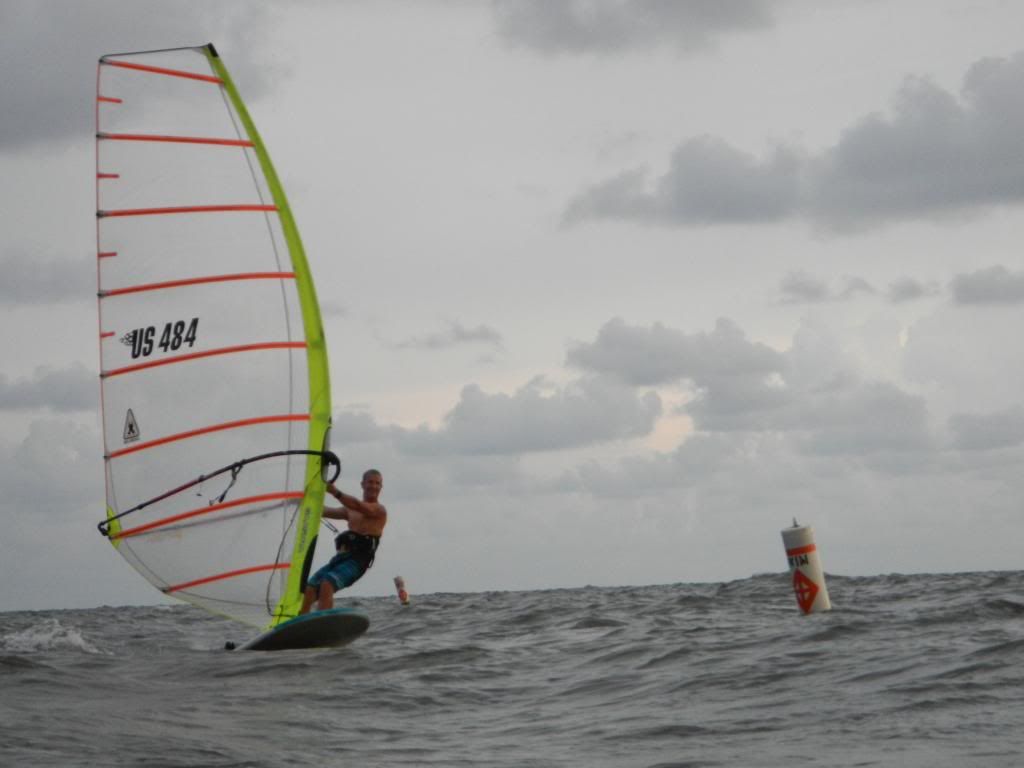
Showing posts sorted by date for query slalom. Sort by relevance Show all posts

Saturday, July 29, 2017

Race Report: Flying Fish Summer Paddle Challenge

Race photos taken by Jen Hayes.


Race: The Flying Fish Summer Paddle Challenge 2017

Date it happened: 29 July, 2017

Host: The Flying Fish Paddle Sports

Location: The event was at the River Palm Cottages resort on the Indian River Lagoon in Jensen Beach, Florida. I liked that it was near where I used to live in Fort Pierce, and I was able to go to a Cajun restaurant I liked the night before the race with my CGT race team buddies. We didn't sign up soon enough to get a room at the cottages, but we found other hotels in the Stuart / Jensen Beach area.

Course / Distance: There was a long straight course for the kayaks and outrigger canoes, and a more complex multi-lap course for the SUPs. The SUPs could either do a short course (2 laps, 3.8 km) or an "elite" course (5 laps, 9.5 km).

Conditions: It was hot and humid as hell, with a modest breeze from the SW shifting to the NW. The water was shallow enough to hit the paddle blade in some parts of the course, demanding tactical decisions about whether to take a longer path to avoid it or just bust right through it. Even if your paddle blade wasn't hitting, you would still be slowed down by hydrodynamic effects that increase drag on displacement vessels in water depths less than 1/2 of the vessel length.

Participants, Results and gear: 47 people did the short SUP course, 36 did the elite SUP course, and 11 did the canoe/kayak course. For the elite SUP course there were $500 prizes for first place men's 14' and first place women's 12'6, which drew many of Florida's best paddlers. On the women's side was international pro Seychelle Hattingh (SIC boards), who races all over the world but is based in Key Largo. Seychelle had significant competition from teenage phenomenon Maddie Miller, and SW Florida's Meg Bosi (Bark boards) was also vying for the podium. Long time top female contender Kimberly Barnes was there volunteering but couldn't race because she's recovering from a sports-related surgery. On the men's side was last year's Flying Fish champion Sam English, now riding NSP boards. Sam faced a deep field of tough competitors this year. Looking at the names on the registration list I had trouble predicting the likely winner. I mentally sorted the familiar names into guys I KNEW were significantly faster than me (Kieran Grant [Hoviesup], Steve Miller and Tim Warner [Starboard]) and those who I figured were tough but I might be able to beat if I paddled well (Mark Athanacio [Hoviesup], Packet Casey [JP], Jake Graham and Joey Huemphner [Flying Fish boards], Reid Hyle [very fast guy but with a slow board]). My categorization was off, though, and several people I hadn't even thought I needed to worry about got the better of me, including Travis Kindt (ECS boards) and David Slemp (Hoviesup). I was the 11th SUP over the line in 1:10:07, but I consoled myself that at least my time wasn't TOO far behind the leaders. The top three in the major categories, along with their board types and widths if I remember them, were:

14' Men
Steve Miller 1:06:16 (Starboard Sprint 21.5)
Joey Huemphner 1:07:26 (Flying Fish allwater 23)
Kieran Grant 1:07:37 (Hovie Comet GT 23)

14' Men 50+
Mark Athanacio 1:09:45 (Hovie Comet GTO 23)
David Slemp 1:10:02 (Hovie Comet ZXC 25)
Gary Roethe 1:12:09 (?)

12'6 Women
Seychelle Hattingh 1:11:05 (some kind of narrow SIC flatwater board)
Maddie Miller 1:13:57 (JP flatwater) [1st in 17 & under class]
Jessica Ventura 1:16:13 Meg Bosi 1:17:30 (Bark Contender 25)

12'6 Men
Matt Kearney 1:15:38 (Starboard Allstar 24.5). Matt was the only man on 12'6- time to get a 14.

The full results are posted on paddleguru.

Play by play: They ran the short course first, which was nice because there was a pier over the water I could watch that race from to mentally picture my own route around the buoys. In the short race, those who could do efficient buoy turns put a lot of distance on those who couldn't in the 3-buoy "slalom" section at the end of each lap. I was glad I'd done some buoy turn practice in the preceding week, and gotten some good buoy turn tips at a clinic taught by SUPerman Robert Norman.

When the short race was over it was around 10 am, and it was HOT. All the racers knew the heat would be a major factor, so we were dunking in the water, wetting our shirts, skulking in the shade, etc. For the starting lineup, the race director requested that those in contention for the podium line up on the south end of the beach closer to the first buoy to minimize traffic between faster and slower racers. Considering myself one of the "slower of the faster" guys I lined up more towards the middle of the beach. My strategy for the start was to run with my board until the water got too deep, rather than jumping on the board early and having to paddle a long way through the very shallow water. It worked terribly, because people who threw their boards down earlier blocked off my running path and put me behind them. I ended up in bad traffic in chaotically mixed waters, watching those who had started better instantly extend a long lead. But there were so many wakes surging through the water that I was easily swept along, even through the speed-killing shallows after the first buoy. I weaved my way around and by the second buoy I was in an OK position again. I managed to catch up to and pass Jake Graham, but that wasn't surprising because he'd told me he was taking this one easy after not paddling for a long time.

In the slalom section of the first lap or two I seem to remember sticking the nose of my board onto the tail of the boards in front of me and/or in front of the paddlers' legs to help make tight turns. I was close to Reid Hyle and David Slemp, and I think I drafted them some but was mostly on my own, trying to gradually catch up with Mark Athanacio, who wasn't drafting anyone at that time, either. Mark slowed down to hasten our catching up, and was then eager to have someone else pull the draft. After catching my breath, I pulled for a good bit, sometimes going in the side-draft of Mark or Reid but always trying to stay near the front of the train. I ended up pulling ahead of the other guys when I made a better-than-usual buoy turn at the far end of the course on the third or fourth lap. At that point I thought I might be able to just paddle away from them. But what actually happened was that I stayed only a few board lengths ahead, tiring myself out, while they continued paddling efficiently and drafting. They seemed to close in on me in the buoy turns sections, since as I got more tired I was worse about re-accelerating after the turns. On the final lap Mark Athanacio passed me, and soon all the guys who had been near him did, too, along with Travis Kindt who must never have been too far behind us. I was tired and flustered, and had trouble keeping up with the draft group, especially since they were now accelerating the pace to try to edge into leading positions. My problems keeping up were exacerbated when I fell in knee deep water struggling to stay in the shifting draft wakes in the dang shallows near the end of the last lap. I kinda knew it was over for me then, but I hopped right back on and still stayed with the group, at the back.

Our little group of five all finished within a 22 second period, with Mark at the lead and me at the back. Although I was satisfied with my overall time, speed, and physical output, it burned me a little to lose all those places in the finishing order. It was a good lesson in the importance of drafting and strategically budgeting energy. For example, my pushing hard in the third and fourth lap was probably counterproductive because it left me unable to fend off the wolf pack at the end.

Here's my GPS track from the race. If you're registered on Strava you can click into it and see the details:


Other race intrigues: A young Australian man working the ECS boards tent at the race was stung by an American wasp and had an allergic reaction. He was fine after some Benadryl and a nap. Fortunately he was well long enough that I got to try out some of the ECS boards. There was a narrow dug-out flatwater one and an 25" wide "allwater" (Travis Kindt's board). I like Travis' best. It seemed to have really good water-slicing characteristics for a relatively wide board. Next time I'm on the east coast I'd also like to try the Flying Fish boards, which are a new small brand designed and distributed by the shop of the same name. As evidenced by Joey Huemphner's 2nd place finish in this race, they're capable of top-level speeds with the right paddler.

What's Next: Tomorrow morning is a local CGT Kayaks sup race. Nothing like following up a race with a race!

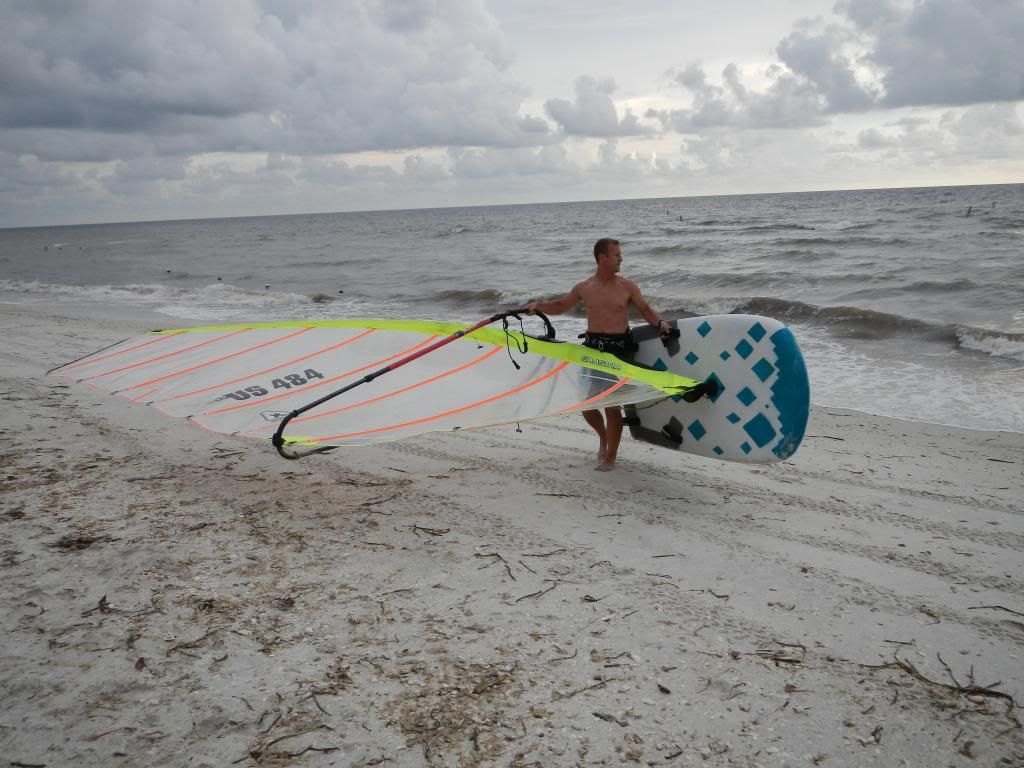
Tuesday, August 6, 2013

This quiver goes to 11

Moving from New England to Southwest Florida last year I gained year-round warm water in exchange for giving up regular strong wind and waves. I also gained a storage shed so I started accumulating windsurfing gear tailored to the light-winds and crummy waves of the Eastern Gulf of Mexico. Here's a rundown of the quiver I started with and how it has changed over the past year.

New England Wave-Centric Quiver-
Big Board: Angulo Surfa 10'4" sailable SUP with center-fin added for Rhonda
Med Board: Exocet Cross II 106
Small Board: Starboard Evo 83
Sails: 3.5, 4.2, 4.7, 5.5, 6.8, 8.0
Masts: 400 rdm, 430 rdm, 490 sdm
Booms: Aluminum small, Carbon medium

1. In August 2012 I got a huge carbon formula boom from my friend Brandon, who was ironically moving away from the Florida on the same day that I arrived. Also ironically, it was the same boom that I had given Brandon when I moved from Florida to New England in 2010. At that point I had no sails that needed the huge boom, but I figured I'd need it sooner or later.

2. In October 2012 I bought an Exocet WindSUP 11'8" longboard from Ace Performer in Ft. Myers. After one barely-planing session with my 8.0 sail on the WindSUP, I decided I needed a bigger sail to unleash the full power of the board.

3. A week after I got the WindSUP I went back to Ace Performer and got a 9.5 Ezzy Cheetah. One nice thing about the 9.5 is that it rigs on the same 490 mast that I already had for the 8.0. Also, it gave me a reason to use my huge formula boom. With the 9.5 I could get the WindSUP planing in pretty light winds, somewhere in the 10-12 knot range. However I was most often using the WindSUP for wavesailing with my 6.8 sail, which required having the footstraps in the inboard positions. Those positions are awkward when using the 9.5 in flat water, and it's a big pain to move footstraps every time you want to convert your board for a different style of sailing. Screwing and unscrewing the straps also wears out the board. So I started looking for a big shortboard that could be my dedicated ride for flat water light wind blasting. (Another reason I was looking was so that I'd have something to ride in the December "Inlet to Inlet" ocean race.)

4. The first board I auditioned for the dedicated light-wind planing role was a 2001 Starboard F135 85 cm wide formula board, which I got used for $400 from Ace Performer. It worked fine, especially after I swapped the oversized fin it came with for a just-right-sized 58 cm Finworks fin. Probably the high point for that board was when I sailed it in the Sarasota Winter Classic Regatta in February 2013.

5. I was never crazy about the low volume (~130 liters) of the F135, which I felt limited it's all-around light wind ability. So when I had the opportunity I swapped it for another vintage formula board- a Bic FV1.2 with 160 liters volume and 87.5 cm width. The Bic was a real nice board, especially in 12+ knots. It felt more like a big slalom board than a formula board, and it was real fast and comfortable reaching and on downwind runs in choppy water. The only frustrating thing was that it didn't seem to have quite enough power to get planing in the most typical SW Florida summer seabreeze strength; about 8-10 knots.

6. My quest for more light-wind planing power lead me next to Dr. Don Wagner and one of his home-built 100 cm wide formula boards. The Dr. Don board is super powerful- definitely a winner for light winds. So I went ahead and sold my Bic FV1.2. Of course, even a super wide board won't get you planing in 8-10 knots unless you supply it with lots of sail power. My 9.5 wasn't quite up to it.

7. My FINAL (I promise) light wind power play was to buy a used 11.0 Gaastra Nitro IV sail and matching 550 cm mast from Dan Weiss in Connecticut. The absurdly long and narrow package arrived via Fed Ex yesterday afternoon and was rigged and on the water at Bonita Beach by 6:30 pm. The conditions for sailing were challenging, with squally 7-17 knot winds spanning the range from not-enough-wind-to-plane to too-much-wind-to-hang-on. I also probably hadn't tuned the sail well. I.e., the boom was too high, I didn't have enough slack on my adjustable outhaul, I needed more downhaul, the mast-base was too far back, etc. Nevertheless, it was obvious that the sail had a lot of power on tap. Rhonda was swimming with her waterproof camera and took some pictures.

 photo 024.jpg  photo 110.jpg

Anyway, here's the Southwest Florida Light-Wind-Centric Quiver-
Primary Sailable SUP: Exocet WindSUP 11'8"
Secondary Sailable SUP: Angulo Surfa 10'4"
Super Light Wind Planer Board: Don's Lab wide-tailed formula board
Med Board: Exocet Cross II 106
Small Board: Starboard Evo 83
Sails: 3.5, 4.2, 4.5, 5.5, 6.8, 8.0, 9.5, 11.0
Masts: 400 rdm, 430 rdm, 490 sdm, 550 sdm
Booms: Aluminum small, Carbon medium, Carbon huge

XD

Sunday, June 23, 2013

"Don's Lab" Home-built Formula Board


Last week I fussed on the "iwindsurf.com" forum about Florida's light summer seabreezes and how my current formula windsurfing setup just wasn't quite powerful enough to take advantage of them. I wrote that I was potentially in the market for some bigger, better, used formula gear. Lots of people replied with offers, including Don Wagner, an Emergency Room doctor from Vero Beach.

Don actually builds his own windsurfing boards. I'd met him and seen his creations in action a few times at local regattas. I thought the boards were super cool but I didn't imagine I'd ever ride one because "Don's Lab" is not a commercial venture. Dr. Wagner just builds the boards he'd like to ride, then he retires them from use as he comes up with new board ideas. I was very excited when he offered to give me one of his retired formula boards for free. He also had some big formula fins and stuff he was looking to sell.

I didn't waste any time driving across the state as soon as I had a day off. I met Don and his artist wife at their beautiful house, ensconced in a cool jungle of shade trees and tropical plants and flowers. The Wagners were exceptionally hospitable and I really admired their comfortable and close-to-nature approach to living in Florida. Needless to say I also admired Don's workshop and windsurf menagerie. He's made everything from surfboards to SUPs to slalom and formula boards. He even showed me a hydrofoil-board that he'd made! So cool.

I thought that for the price of free I'd be getting one of his earliest formula board experiments, but he actually helped me pick out what seems to be a very modern design similar to the latest ultra-wide-tailed, double-chicken-strap boards made by the major windsurf manufacturers.
One of the only obvious differences between Don's board and a mass-produced formula board is the thinness of the tail section on Don's board.
Here you can compare Don's custom board to my 2002 Bic Formula board.
Another difference between the two is the fins. The one on the Bic is 58 cm. The one I bought for Don's board is actually even longer than the class-legal size of 70 cm, because it's a moderately cut-down 85 cm fin! It should be great for early planing and going upwind.
Of course I'm desperately eager to take my new acquisition for its re-christening voyage, but so far the wind has been too light and variable even for formula. I kept busy today, though, by giving it a coat of white paint and some funky blue graphics. Don doesn't paint his boards because the paint adds weight, but figured I'd paint this one.
I hope it floats. I'll try it with my 9.5 sail first, then I may or may not add an ~11.0 sail to my quiver to see how early I can get it to plane.

Tuesday, November 20, 2012

Formula Board Test Run Video

Last week I got a new, used, "formula" windsurfing board- a Starboard Formula 135, model year 2001. I had been in the market for an early planing shortboard to match my new 9.5 sail, and this one was a steal at Ace Performer.


Ironically, this new toy is the oldest of the four formula boards I've owned during my windsurfing career, due to multiple cycles of quitting and restarting formula windsurfing. It's also the smallest, at just 85 cm wide and 135 liters volume. It probably wouldn't be competitive on the racecourse with a modern, 100 cm wide formula board, but I'm not competitive on the racecourse, anyway, and 85 cm is enough width to get quite good early planing. The dimensions and volume of the F135 actually match closely with modern light-wind slalom boards, which max at 85 cm wide and are similarly thin in cross section. So I've been thinking of the board as a poor man's light-wind slalom board.

The standard fin length for a 100 cm wide formula board is 70 cm, but that would be overkill for an 85 cm wide board. The F135 was originally marketed with a 58 cm fin, but the secondhand board I got came with a 65 cm fin, which I worried would be too long. I tried it for the first time (well, the first time in decent wind) on Sunday. The 65 cm fin wasn't unmanageable, but I think the board will be faster with a 58. I'm trading the 65 for another windsurfer's 58, which I think will be perfect. Anyway, here's a video of my test session at Wiggins Pass in Naples, FL. The sail is my 9.5 Ezzy Cheetah. The wind is side-offshore around 9-13 knots. The songs are by Tomas Walker and by the Ramones.

11-18-12 F135 Test Run from James Douglass on Vimeo.

One thing I notice looking at the video is how much the bottom of the sail flexes, twists and flaps. I think part of that is the product of it being a camless sail with durable rod battens instead of stiff tube battens. Another part may be the way I'm using a pulley hook through the clew grommet for my adjustable outhaul. I've ordered another kind of pulley system that's integrated with the grommet, and I think that may help stabilize the back end of the sail. Stay tuned.

Friday, May 11, 2012

Windsurfing Kicked Out of the Olympics, Kiteboarding Kicked In

Windsurf racing has been in the Olympics every quadrennial since 1984. As the sport has evolved, however, the Olympic boards and sails have periodically changed, always amid controversy and debate. The general trend has been a move from boards optimized for sub-planing performance to boards designed for faster planing performance. The trend has stopped short of planing-only boards, however, because the Olympic sailing committee has wanted gear that can be used in ANY wind, and the best planing-only boards still require a steady 8 knots or so for good racing. Planing-only windsurfing also tends to require multiple set of sails and fins for different wind strengths, which is incompatible with Olympic sailing's "one-design" philosophy, i.e., all competitors have to use the exact same gear all the time.

The current Olympic one-design gear is the Neil Pryde RS:X. It was used in China in 2008 and it will be used again in England in 2012. Nobody really LOVES the RS:X, which is a lot bigger and clumsier than what most windsurfers ride for fun, but it fulfills its mission of being able to navigate the race course both in planing mode and in light wind "displacement" mode. As with previous Olympic windsurfing classes, RS:X competition in light to moderate winds is characterized by the competitors constantly rowing the air with their sails; "pumping" to go faster. That means Olympic class windsurfers have to be ultra athletic, but it kind of misses the point of sailing, which is moving with wind power as opposed to muscle power. It also looks really un-fun compared to other forms of windsurf racing like slalom and formula where the nature of the gear limits the need to pump, or the Kona one-design class where a rule prohibits pumping. Therefore only a small minority of windsurfers (the most competitively-driven and masochistic) aspire to compete in the RS:X class. Nevertheless, it's a source of pride for windsurfers to have their sport represented in the Olympics, and to marvel at the levels of athleticism and sailing skill reached at such an ultimate tier of competition. I for one am super proud of America's Farrah Hall and Bob Willis, who busted their asses to reach the top ranks in the US and to qualify our country to compete in England this summer.

This video shows an RS:X race in light to moderate wind, where there is a mix of pumping and planing performance.


As for kiteboarding, there have been people lobbying for several years to make it an Olympic sailing class. But most windsurfers assumed that the same factors preventing planing-only windsurfing gear from getting into the Olympics (the one-design constraint and the need to be raceable in any wind condition) would be insurmountable obstacles for kiteboarding. After all, kiteboarding has no existing one-design classes and it is a planing-only sport that requires steady wind to keep kites aloft. So the windsurfing world was shocked when it was recently announced that the 2016 Olympics in Rio de Janeiro, Brazil would add kiteboarding and eliminate windsurfing! How did this happen?

Well, kiteboard racing has undergone an impressive evolution in gear performance and organizational professionalism since its haphazard beginnings. Refined, windsurf-like kite-race boards are now among the fastest and earliest-planing wind-powered watercraft of any kind, and there are big, competitive fleets in the International Kiteboarding Association's world championship tour.

This is an interview with the current kiteboard racing world champion, Johnny Heineken, and it shows some footage of kite course racing.


With large kites on long lines that can loop and "sine" through the air to generate power, kite-race boards can get going in surprisingly light winds. Just how low the wind requirement is tends to be exaggerated, and the problems of what happens if there is a lull that allows the kite to drop in the water are overlooked. Nevertheless the wind threshold for practical kite racing seems to be at least on par with that of formula windsurfing. Of course, kites can't compete in ALL conditions, as evidenced by their skunking at a 2011 Miami Olympic sailing classes event last year where RS:X windsurfers raced successfully. 

Anyway, what seems to have happened is that lobbyists for Olympic kiteboarding miraculously convinced sailing's governing bodies to overlook their usual one-design constraints and wind minimums to consider the current form of kiteboard racing for an Olympic slot. Then, when compared against the RS:X windsurfing class, which is still crippled by the one-design rules and the air-rowing dynamic in light winds, kiteboarding looked a lot more spectacular and had the leg up for Olympic selection. Of course, some questions remain-

1. Why couldn't they bump one of the other sailing classes to have windsurfing AND kiteboarding? After all, windsurfing and kiteboarding are very different from each other, as I discussed in a previous blog post, but they are each among the most popular and accessible forms of sailing. Actually, the Olympic committee DID bump two big-boat classes out of the Olympics, but they kept four types of monohull dinghy: laser, finn, 470, and 49'er, which I think is about twice as many dinghy types as needed. (On a positive note the committee added catamarans back in, which I think is good since cats are fast and popular among recreational sailors.)

2. Why couldn't they give windsurfing a chance to compete as a production board class (e.g., formula or slalom) like they did for kiteboarding? It seems like the selection committee has been considering "boards" as something distinct from the other sailing classes, based on their forcing a choice of kite- OR sailboards. So if they're willing to suspend the one-design constraint and raise the wind minimums for kiteboards they should be willing to give the same special treatment to sailboards.

This post is getting long, so let me try to wrap it up with a summary of my thoughts. I actually don't think this decision is the end of the world for windsurfing. In fact it may not even be the final decision- there's a petition gaining a lot of momentum now to keep windsurfing and have both sports in the games.

  http://www.change.org/petitions/isaf-keep-windsurfing-as-olympic-discipline

If the petition works, great. If it doesn't work, I think our next move should be to lobby for production class windsurfing (slalom and / or formula) to be in the Olympics. This could be our chance to finally get away from the whole air-rowing one-design thing and show our sport for what it really is to most people- a fast, free, thrill ride across the water.

Wednesday, December 7, 2011

Was my last session my last session?

When it gets into November in New England you'd better treasure your each and every windsurfing session. You never know which one is going to be your last for the season. I might have had mine about a week ago. It had been blowing hard from the SW all day, but had slowed down a bit by the time I got out of work and got to Josh Angulo's garage to pick up a board. On his recommendation I took an Angulo Magnum 84 slalom board with a 50 cm fin, and I rigged up my camless 8.0 Aerotech FreeSpeed sail. That was just the ticket for a well-powered blast across the flat water along the Nahant Causeway. It was a short sesh, ended by dusk around the same time it would have been ended anyway by my cramping gloved forearms. I'll be OK if it was my last session for 2011, but dang, it would sure be great to get just one more. Here's a video not from the session I just described, but from one a few weeks earlier that I never got around to posting. Nothing too extreme, but I think it fits pretty well with the music and stuff. Enjoy.

Saturday, August 13, 2011

Recent Windsurfing "Best Ofs"

The other day while I was taking a little coffee break or something, I thought about how I've been slacking off from my usual obsessive pace of windsurfing and blogging. I could attribute it to a combination of summer fieldwork, scheduled weekend activities, exciting new romance, and lack of wind. But I'd rather not substitute excuses for action, so I'll try to get back on my game, following the James' Blog philosophy of "100% Science, 100% Windsurfing, 100% What-have-you." To begin with, I'll do a little review of some of the "bests" of the Summer 2011 windsurfing season.

Best Jibe = Josh Angulo's high-wind slalom jibe at the recent PWA contest at Fuerteventura in the Canary Islands, captured in this photo by John Carter. Look at how aggressively he's laying down the sail and digging in the rail. It's like a hardcore wave bottom-turn applied on the slalom course. Badass. You can see a bunch more photos and videos like this on the PWA website, which seems to get better every year.

Best New Competition = The American Windsurfing Tour. This year kicked off the "AWT", which is a series of expert-to-amateur-level wave windsurfing events in North America, the likes of which has not been seen since windsurfing's heyday in the '80s and early '90s. They've already had successful events in Santa Cruz, California, Pistol River, Oregon, and San Carlos, Baja, Mexico. The next one coming up is in September in Hatteras, North Carolina, and the final is in November in Maui, Hawaii. The competitors in these events are an interesting mix of up-and-coming youths, wave-savvy women, semi-retired professional legends, and local wind gurus taking it to the next level by competing. All in all I think it's a good indication that hard-core windsurfing is still alive in this country. (Photo is from Pistol River, Oregon. I'm not sure who the photographer was...)

Most Utopian Windsurfing Racing Class = The "Kona" one-design class. The Kona ONE longboard has been around for a few years now. It's a nice board to sail, and it has become the basis of a very successful racing class in some parts of the world, especially Scandinavia. It's successful because it's easy to use, it's pretty fast in both light and strong winds, and because the class rules allocate different size sails to different sailor weight classes to insure fair competition from spry and petite girls all the way up to hulking burly men.


Most Lust-Worthy New Board = The Starboard UltraSonic 147. It's a high-performance, 93 cm wide shortboard that achieves a fine blend of slalom-board speed and formula-board planing power. It has an ultra-light, ultra-stiff, ultra-expensive construction, with fancy shaping features like a deep concave in the top deck and a complex arrangement of cut-away sections in the tail to reduce drag and improve top speed and jibing. I tried it at the Windsurfing Magazine board tests in Cape Hatteras this spring, and I can confirm that it works as advertised. So if you're a successful orthodontist or hedge-fund financier and you've paid off your mortage and your kids' college tuitions, you should get one. And buy me one while you're at it. (The video is a short clip of one of my rides on the board at the board test.)


Best Sign of the New Generation in Windsurfing = The Techno 293 Worlds in San Francisco. The Bic Techno 293 is a board used in a growing one-design racing class for kids and teenagers, which is intended to be a feeder class for Olympic type windsurfing. Though the biggest Techno 293 fleets are in Europe, they had their world championship this year in San Francisco, California, and it was awesome, apparently.


Best Windsurfing Session for ME = August 4th in Lubec, Maine. I sailed around Quoddy Narrows in a nice East Wind from the Bay of Fundy. I was riding a Mistral Equipe XR longboard with an 8.0 camless "Freespeed" sail from Aerotech. I started out going way upwind with the daggerboard down, eventually approaching the shore of Canada's Campobello Island, where I might have sneaked ashore on a small islet and might have stolen a rock as a souvenir. The wind picked up as I went back downwind, and I got some screaming reaches, interrupted only by occasionally snagging a piece of Laminaria kelp on the skeg! When I was in about the middle of the bay I decided to make a beat against the current towards the narrows and the bridge at downtown Lubec. Though there was plenty of wind power, it was amazing how the current turned the water slick flat and slowed my forward progress to almost nothing as I got near the bridge. I barely made it under, but was rewarded when I did with the sight of a bunch of playfully leaping seals in the tidal rapids. As soon as I tacked I was rushed back out under the bridge, and took a series of broad reaches back to my launch site. Ahhh.

View Larger Map

Tuesday, May 10, 2011

Angulo to Korea, Random Windsurfer in Memphis

*UPDATE* Angulo is doing pretty dang good in Korea so far. He's had top-3 positions in several heats, mixing it up with Albeau and Dunkerbeck, and has made it to both winners' finals. (Link to the standings.) It must be those battens I helped him with last week. ;)

So, I didn't manage to get a windsurfing session today, but I did do some windsurfing-related tinkering at Josh Angulo's house after work. We custom-tweaked the battens on his 8.7 and 9.5 Gun "Mega XS" race sails, and I picked up some special slalom fins he bought from Dave Kashy. Josh and his mountain of equipment leave tomorrow for the PWA contest in Ulsan, Korea. Hopefully the gear modifications will help him kick butt.
In other news, a windsurfer in Memphis, Tennessee is apparently adapting well to the Mississippi River flooding...
(The latter news bit was passed along by Windsurfing Magazine on facebook.)

Tuesday, April 5, 2011

For Sale: (sniff sniff) My Slalom Board

*UPDATE- SOLD*

I owe the Federal government big bucks this year and it's gonna be tight so I need to sell some stuff. My most valuable possession is probably my all-carbon, badass-black 2009 Exocet Warp SL 71 windsurfing board. It has 118 liters volume, handles 5 - 9 meter sails, and sells new for $1700. Mine is in practically new condition with no dings or anything. You can have it for $775 without a fin, or $850 with a 44 cm Tectonics Maui 44 cm slalom fin. You'll have to pick it up or pay the full cost of shipping which could be a lot.


The other stuff I'm selling is listed in the sidebar: a 4.2 Naish wavesail, a 30 cm carbon MFC freewave fin, and a semi-dry wetsuit for scuba diving.

Wednesday, March 30, 2011

Windsurfing Mag Board Tests - Videos

I'm sitting in the upstairs living room of a big rented house in Avon, North Carolina. We just had a humongous Thai dinner cooked by Sue from Buffalo, NY, and now a bunch of the fellas are sitting around the dinner table drinking beer, wine, and coffee and talking about religion, taxes, and politics. I reckon they got in this philosophical mood after our windsurfing celebrity guest, Josh Angulo, arrived yesterday. Josh gives a lot of credit to Jesus for helping him and his family through some rough patches in life, and when he was showing us the "Angulo" boards he brought for us to test he explained why they all have "Jesus Loves You" written on the bottom. Even though my own spiritual views are pretty different, I can identify with feeling a heart and soul connection between windsurfing and life.

Anyway, the windsurfing here has been great. I'm posting some footage of the first two days of our trip...

Day 1: 25-35 mph Northeast. Rode the Naish Nitrix 105, RRD fsw 101 (not in the test), JP All Ride 106, Starboard Carve 111, Quatro Freeride 110, F2 Vantage 126, Tabou Rocket 105, and Exocet Cross 114.


Day2: 10-20 mph Northeast. Rode the Starboard UltraSonic, Exocet Twixx 145, Goya FXR 144, and JP Slalom 76.


Chad Perkins took this sunset picture yesterday.

Monday, March 14, 2011

Beginner Board Dilemma

This summer I'd like to teach some of my new Massachusetts friends how to windsurf. The problem is that I don't currently have a board suitable for beginners, and if I get one I'll probably have to sell one of my other three boards to make space. My current board "quiver" is:

Starboard Evo 83- High wind, wave-oriented shortboard used with 5.5, 4.7, 4.2, and 3.5 m^2 sails. 83 liters volume.
Exocet Cross 106- Medium wind, wave-oriented shortboard used with 6.8, 5.5, and occasionally 4.7 m^2 sails. 106 liters volume.
Exocet Warp SL 71- Medium wind, speed-oriented shortboard used with 8.0 and 6.8 m^2 sails. 118 liters volume.

The one that would probably have to go would be the "Warp", since the other two are vital for wavesailing, which is my favorite kind of windsurfing. It would be nice if the beginner board could have some of the characteristics of the Warp it would be replacing, specifically:

1) Fitting inside my van.
2) Fitting the role of early-planing shortboard for me.

I was thinking something like an older Starboard Start, Starboard GO, or Bic Nova might do the trick. Maybe one with just a small, removable center fin instead of a full daggerboard. I guess there's no rush to make the switch now, though, since it will be a few months before it's warm enough for beginners to get in the water. In the meantime, if you think you want to buy my Warp or sell me a beginner board, let me know. I would consider selling the mint-condition warp for $800 with no fin or $900 with a 44 cm slalom fin. Here's a picture-

Tuesday, November 30, 2010

Quitting Kiteboarding

I learned how to kiteboard about a year and a half ago when I was living in Florida. Although I often had gear failures and frustrations, I mostly avoided injury, and I found kiteboarding to be easy, fun, and well-suited to Florida's prevalent, light seabreezes. Windsurfing remained my preferred sport for winds over 15 knots, but a 12 meter squared kite and a few kiteboards took care of most of my "light wind planing" needs. I figured I'd be a two-watersport guy for the rest of my life, but things changed.

One thing that changed was that I moved to Massachusetts, where the wind is gusty and the water is cold. I've kited a bit here, but it's sketchy. In these conditions I prefer the security of a board that floats and a sail that I know will stop pulling when I let go. It's also windier overall in Massachusetts than in Florida, and I don't seem to need anything more powerful than a 7 or 8 msq windsurf sail and a slalom board to get plenty of fully-powered sessions.

Another thing was realizing that I simply like windsurfing better than kiting. It's not that I don't like kiteboarding- I do. I think it's cool to be effortlessly powered in "tweener" wind strengths with a kite, and the soaring, Peter Pan jumps are a rush. But the basic riding sensation is more satisfying to me on a windsurf. I like the direct feedback from the board, the fin, and the sail, and I feel more like the whole assembly is an extension of myself. On a windsurf I can sail along not doing anything special, just appreciating the feeling of motion and forces in balance. I get a little of that kiting, too, but it's not as nice.

The final thing was my limited storage space, time, and financial resources. I started thinking about an extra $1500 in my pocket, a less cluttered van and board rack, and fewer "what to rig" decisions, and I decided to QUIT KITEBOARDING AND SELL MY GEAR. If I someday find myself idle rich and living in a warm, light-wind place like Florida or San Diego then I may take it up again. We'll see.

Anyway, here's a video from yesterday afternoon of what may have been my last kiteboarding session ever. Below the video I've listed the kite gear I have for sale.

Last Kite Sesh, 30 Nov 10 from James Douglass on Vimeo.


2008 Flysurfer Speed 2 (closed-cell foil kite) 12 msq. Perfectly tuned with bar and lines included. $750 SOLD
Two-line trainer kite, 4 msq, with bar and lines. $60 SOLD
Michael Gebhardt - designed directional freeride / raceboard. Unique and extremely badass. $500 SOLD
2006 Litewave Freeride 179 cm Twintip. Best beginner kiteboard ever, and very comfy ride in chop. $180 SOLD
2009 Litewave Spirit 137 cm Twintip. Do-it-all kiteboard for medium and stronger wind. Nice footpads. $250

Monday, October 11, 2010

Nahant Slalom Session, Intertidal Rock Stars

Well, after a month or so living in Massachusetts I finally got around to documenting a cold-water windsurfing session with my GoPro helmet camera. It was a propitious date, 10-10-10, with beautiful, blue sky, mild fall temperatures, and a puffy west wind averaging 15 mph. I figured a slalom session was in order since the breeze was offshore and there was no swell at my favored launch, the east side of the Nahant causeway. My slalom board was on the rack in my living room so I got to practice a new technique for loading and unloading gear; out the back window into the parking lot to avoid the hallways, doors, and stairs of my usual exit path. It worked pretty well.

At the beach I couldn't decide between rigging a 6.8 or an 8.0, but I went for 6.8 and it was fine. A nice windsurfer dude named Eric stopped by while I was setting up and I encouraged him to rig even though he had only brought a 5.7 and a freestyle wave board. He went for it and managed to plane a good chunk of the time, so that was cool.

Since it was a weekend day there were a lot of people out strolling the beach, flying kites, etc. At one point during the session I noticed a runaway, long-tailed rainbow kite with the spool skipping along behind it in the water. I happened to be on a good heading to intercept it so I bore off the wind and crossed the line just in front of the spool to snag it with my fin. It was windy enough that the drag from the kite didn't stop me from planing all the way back to the beach with the kite in tow. There I transferred it to some folks walking on the beach, who transferred it to the dude who lost it, who was a really friendly guy who thanked me after the session and told me the story about how the kite was a treasured gift from his sister in Hawaii and he was mortified to have lost it / delighted to have it recovered. Woo hoo!

Here's the video from the session, set to "I Feel Free" by Cream.

Nahant Windsurfing 10-10-10 from James Douglass on Vimeo.


In other news, I've been spending a lot of time doing marine biology fieldwork up in Maine. It's generally wet, chilly, and blustery up there with big waves smashing into the seaweed-covered rocks where my colleagues and I are scrambling frantically to take our samples before the tide returns. Part of what makes it fun, though, is that I get to use cool gear, like a metal detector to find the bolts in the rock marking our experimental plots, and heavy duty rubber rainclothes like the Alaskan crab fishermen wear in "The Deadliest Catch". This studly picture of me was taken Friday evening at Quoddy Head State Park, after we had finally surveyed the last plot at the site. Yeah!

The pictures in the slideshow below are borrowed from PhD candidate Genevieve Bernatchez who was there as a TA for a group of undergraduate and master's students doing the "Three Seas Program"; a year of challenging marine biology courses and real research projects in Massachussets, Washington State, and Panama. The three seas program is offered through Northeastern University but is open to any student who has the grades and motivation to get in and whose parents are willing and able to spend a buttload of money to pay for it.

Tuesday, August 10, 2010

My Velouria! And Epiphytized Seagrass

Frank Black, from the late '80s band "The Pixies", is so the man. I figured it would be appropriate to have his singing in this video where I'm riding my black windsurfing board, the Exocet Warp SL 71. The sail I'm using is an Aerotech Phantom 6.8, which I like a lot because it's equally comfortable on this slalom board and on my Freestyle-Wave board. The launch site is Old Fort Park on the Indian River Lagoon in Fort Pierce, Florida and the wind is out of the southeast in the low to mid teens.

If you don't blink, you can occasionally spot another windsurfer in the video. That's my buddy Brandon, riding his Kona ONE longboard with a 9.65 msq Sailworks NX race sail that he was able to rig for the first time that day since he just got a formula boom. The mast he used was an aluminum 460 jacked up on two extensions. I couldn't believe it worked, but it totally did! Way to go, dude.

IRL Slalom Sesh 9 Aug 2010 from James Douglass on Vimeo.


The underwater part at the end of the video shows the seagrass ecosystem that I've been studying here in Florida. You can see that the blades of seagrass are covered by tufts of brownish algal fuzz. Those are "epiphytes" (plants that grow on top of other plants). When there is an excess of nutrients in the water (like from fertilizer or sewage in runoff), and there aren't enough grazing invertebrates to remove the epiphytes, they can smother the seagrass. Most of the seagrass beds in the Indian River Lagoon are holding up OK, but they are definitely under a lot of stress from the murky conditions and overgrown epiphytes, so their future is a bit uncertain. I wrote a more detailed post on seagrass a while ago. You can read it here.

Wednesday, July 28, 2010

Something Big and Amazing, in Windsurfing

I think there's something big and amazing going on with the sport of windsurfing now. It has to do with good competitions and events being organized at all levels around the world, and the collective stoke of the windsurfers involved being creatively channeled and magnified through a maturing "new media" network of photographers and filmmakers, bloggers, websites, etc. What it amounts to is that the wonders of windsurfing, which had languished for a decade or two in isolated pockets of knowledge and stoke, are rising again into the light.

There are lots of ways you can tap-in to the flow of what's going on in the sport, but here I'm just going to recommend two main ones: "DaNews" and the Professional Windsurfing Association Website.

DaNews is run by a Floridian guy named Clyde who is really good at collecting and collating all the freshest internet-published news and videos about windsurfing stuff happening everywhere. Like me, his blog also has a sidebar of links to other blogs with interesting windsurfing content, so DaNews is kind of like one-stop-shopping for your windsurfing information buzz.

The PWA world tour website is less broad in scope, but it covers all the elite level competitions that take place around the world, and features really good photography, nice play-by-play journalism, and classy action videos. I am particularly digging their coverage of the "slalom" racing discipline. It's kind of like the heavyweight boxing of windsurfing, with big tough veteran windsurfer dudes like Bjorn Dunkerbeck, Antoine Albeau, and Finian Maynard duking it out for glory. There's a series of videos from the current competition in Fuerteventura in the Canary Islands that captures the action better than any other slalom videos I have seen so far. I've reposted them here for your viewing pleasure.


Sunday, July 18, 2010

Not Ready For Prime Time; Foil Kites

I had a great windsurfing session early today, blasting around the Indian River Lagoon on my cool-looking black and red slalom board with its matching red and black 8.4 meters squared sail. I felt pretty "dialed in", and enjoyed passing my kite friend John like he was standing still. Heh heh. I quit, contented, around 2pm.

Unfortunately, I got a "second wind" after a refreshing fast-food lunch of fat, sugar, and caffeine, and decided to join a different set of buddies at the same spot for a kiteboarding session. I have a love-hate relationship with kiteboarding. The act is beautiful when it works out, but the gear is horrendously finicky and unreliable. If you use an inflatable kite, your bladders and valves are likely to malfunction, or at least weigh your kite down in light winds, and if you use a foil kite, the bridles are likely to tangle, the fabric to wick wetness, and the chambers to fill with water such that you can't relaunch it if it crashes. Basically, all kite gear SUCKS in one way or another.

There's a diehard camp of foil-kite advocates, however, who will tirelessly espouse the flawless wonders of foil kites. Here are their common claims, with my critical evaluations of those claims based on my preliminary experiences with a foil kite.

Claim #1- "Foil kites are more powerful and efficient and fly better in lighter winds than inflatable kites."
Status = Partially true. If it is tuned correctly and flown skillfully, a foil kite will fly and stay aloft in wind slightly lighter than what it takes to keep a bladder-inflated kite in the air. And because it weighs less, it will rise faster and give more power on the "upstroke" when you are getting going. Once you're up to speed, the 3d airfoil shape of a foil kite pulls more for its size and goes upwind at a better angle than an inflatable kite. But foil kites have a tendency to "overfly" the wind window, "front-stall", and collapse, especially if the wind is gusty or shifting in direction, whereas bladder-inflated kites hold their shape much better and respond to wind changes better.

Claim #2- "Foil kites are more convenient and less of a hassle than inflatable kites."
Status = Partially true. It is definitely nice not having to pump up your kite and worry about bladders and valves leaking. Also, the foil kites pack up nice and small and you don't have to lug a pump around. However, it takes a longer for a foil kite to recover from a crash, because it gets really heavy with wetness and sand and there are complex bridles that take a long time to get untangled. Further, foil kites require "tuning" to keep them performing properly after their lines stretch with use. You need a PhD in aerodynamics and fluency in German to figure out how to tune them in a way that will make them fly better and not worse.

Claim #3- "Modern, closed-cell foil kites relaunch from the water as well, if not better, than inflatable kites."
Status = Total bullshit. IF you are standing in shallow water, and IF there is lots of good wind, and IF your foil kite just happened to crash in the perfect, untangled position at the center of the wind window, then it will relaunch about as easily as an inflatable kite... except that it will yank you downwind with crazy force because you're relaunching it in the "hot zone" instead of at the edge of the wind window. Of course, if your foil kite crashes anywhere other than at the center of the wind window, if it does any folds or inversions when it's falling out of the sky (which it will), if you're in water where you can't touch, if the wind is less than a steady 12 knots, if your feet are in a floaty directional board that doesn't provide much resistance against the kite, if the kite happens to get a little water in it when it crashes, or if a wave washes over the kite, it will be next to impossible to relaunch. I have only been able to do a deep water relaunch 1 out of the 5 times I have accidentally crashed my Flysurfer Speed 2 in deep water. And I ain't no kite kook, neither.

Claim #4- " Foil kites let you jump high and get major airtime in relatively light winds."
Status- True. I am not a very good jumper, but I have had some really nice, floaty airs while riding my foil kite. The only thing is that jumping makes you susceptible to getting in a position relative to the kite and the wind wherein the kite will collapse on itself and crash out of the sky. The difficulty and hassle of relaunching a crashed foil kite tends to make one more conservative about jumping.

Claim #5- "Foil kites turn fast."
Status- Not mine. My 12 meter Flysurfer Speed 2 foil kite turns at about the same speed as my 14 meter inflatable kite, if not slightly slower. When I have to turn the kite for jumps and transitions I need to plan ahead and get the timing right so I don't sink while waiting for the kite to turn. At least the bar pressure required to turn the kite is relatively light.

Claim #6- "Foil kites are safe and easy, especially for self-launching and landing"
Status- Mostly false. It's easy to self-launch a foil kite in most winds, and it's easy to self-land a foil kite in light wind, but it's extremely sketchy to self-land a foil kite in strong wind. Also, because of their powerful, lofty pull, their propensity to fold, tangle, and re-power in gusts and wind shifts, mediocre de-power systems, and their sometimes sluggish steering responses, they probably increase you're likelihood of having a serious accident. I chose not to fly my inflatable kite in wind over 20 mph, and I'll definitely excercise the same caution with my foil kite.

Conclusion- Foil kites may be better now than when they were first invented, and maybe even a little better than my 2-year old Flysurfer Speed 2, but they still have a long way to go before they are as safe, convenient, and dependable as inflatable kites for use on the water by average kiters. I would say that at this point in time, foil kites are most appropriate for good, technically-minded kiters who rarely crash the kite and who sail "door" style twintips close to shore in flat, shallow water and steady, light to moderate winds.

Specific areas for improvement- My Flysurfer Speed 2 would be improved if: 1) It flew with more stability slightly further back in the wind window, 2) It didn't have so many long, fine bridle lines, 3) It had water-repellent fabric and didn't get water in it so easily, 4) It had one-way drains all along the trailing edge that would let the water out when you were trying to relaunch it, 5) It had a users' manual with better pictures and better English translation, 6) The bar had bigger scoops for winding up the lines and stronger bungees on each end that would really lash the line-bundles down well, 7) The chicken loop line and emergency depower line were made of strong spectra or something that wouldn't get moldy and wear through and have to be waxed with a candle and stuff, 8) It had the ability to relaunch at the edge of the wind window like an inflatable kite.

That was a lot of words, now here's the video. The main words it has are angry swear words coming from me when the kite is resisting my attempts to relaunch it. The swear words are pretty bad, aggressive, blasphemous and scatological, so if you don't want to see that ugly, bad-tempered side of your favorite blogger / son / nephew / friend / whatever then turn the video off right after I crash the kite.

Losing my temper with a foil kite, 7-18-10 from James Douglass on Vimeo.

Tuesday, June 8, 2010

Slalom Slideshow

**UPDATE** Posted the video on my windsurfing magazine blog.

Got some good Northeast wind this evening for riding my new slalom windsurf board. Lit to overpowered on an 8.4 sail.

I'll post the video later on my windsurfing magazine blog.

Friday, June 4, 2010

Gebi's "Freeride Raceboard From Hell"

I am a gearhead about windsurfing and kiting, no doubt. I always want to have the right gear to squeeze the maximum amount of joy out of whatever conditions nature provides. Summer in Florida you have to squeeze pretty hard, because the conditions nature provides suck. You're lucky if there's a couple times a week that the wind cracks 10 knots, and truly blessed if it happens during a gap in the thunderstorms and your work schedule. Oh well.

Last summer, formula windsurfing gear was my solution for getting a planing fix in 9-12 knots, and I kited on the great days that it blew 12-15. This year I'm going to try to reverse that; kiting in 9-12 knots and slalom windsurfing in 12-15 knots. Part of the plan is a 14 meters squared kite I bought a few months ago, and the other part is a custom directional kiteboard designed to perform exceptionally well in light winds. It was originally built by and for Olympic windsurfing medalist Mike Gebhardt. He sold me on it by describing it as "Da Freeride Raceboard From Hell". It has a wide shape and quad-fin setup similar to a course-racing kiteboard (the equivalent of a formula board in windsurfing), but with a stronger layup and tail and rail shapes more suitable for jumping and carving. Check it out in these pictures. For size comparison, the top board is my small waveboard for windsurfing.
It has been nothing but thunderstorms and fickle wind for the last few days here, but I'm hoping to get the thing on the water some time this weekend so I can do a full report.

Sunday, May 23, 2010

News and Formula Windsurf Stuff for Sale

I'm in a rush to prepare for a science-related trip to Boston (leaving tomorrow) so I'm going to see how efficient and terse I can be in composing this watersports-related blog entry. I'm giving myself 20 minutes. Ok:

News item #1- I got a new toy from Maui Malones. It's an Exocet Warp Slalom 71, an all-black, carbon fiber, slalom windsurfing board. (For going fast and racing.) Sunday afternoon I rode it with a 6.8 sail in 10-13 knots. In that wind strength I had to pump the sail and fish for gusts to get planing, but once planing, wow! It was like the board had afterburners and could go upwind and plane through lulls like magic. I'm sniffing around for a nice 7.5 - 8.5 sail to complement it better.

News item #2- To avoid toy and time overload, I'm selling my formula windsurfing stuff. Here's the info on it if anyone is interested

2004 Exocet Turbo Formula II. Well used but no leaks or major repairs, 5 straps- $200
Select DC 70 cm fin with screws and washers- $50
520 cm NP 100% Carbon Mast- $100
9.8 Aerotech VMG 2005, fuschia and yellow, durable grid construction, rigs fine on the mast.- $150

There's videos of the gear in action here and here.

$460 for everything if you pick it up in Fort Pierce.


News Item #3- Since the wind was from the Northeast last weekend the Fort Pierce crew launched their kites and windsurfers in the lee of the South Jetty. Here are my most poignant jetty weekend memories:

*The illusion of flying over the underwater terrain because the water was so clear.
*Steering around sea turtles.
*Steering around schools of jacks.
*Steering around bold yellow clumps of Sargassum seaweed.
*Steering around a manatee orgy.
*Chasing a flying fish on a way-out-there windsurfing run.
*Three rednecks wading through the swimming area with full spearfishing gear.
*One redneck returning early and vomiting copiously into the sand. He buried it.
*My roommate Antonio and buddy Marc advancing their respective levels of kiteboarding.
*A fat guy with tattoos and a ponytail hitting on Antonio's Brazilian intern.
*A very stoned teenager stumbling around trying to bum a ride to Port Saint Lucie.

Another thing wasn't so much a memory as a set of observations confirming my theories about what it takes to kiteboard in light winds. It takes a big board, a big bow kite, gentle kite trim, and only moderate edging with the board. Some good kiters had big enough kites but tiny boards that wouldn't allow them to stay upwind. In windsurfing it's obvious that you need a big board to use a big sail. A similar principle seems to apply in kiting, but a lot of kiters just don't seem to get it. They lose in the light wind stuff because they never go bigger than their narrow little 125 - 150 cm boards. Some other kiters were sheeting and sine-ing their kites too aggresively, generating power but getting dragged downwind or stalling their kites on the upstroke. In light winds I think it's better to ease out on the sheeting and let the kite "suck" you upwind, which of course is easier to do if you have a bigger board with more glide and float. The sheeting out a bit to go upwind technique works best when you keep your board speed up and the kite flying efficiently by not edging harder than necessary to maintain line tension. Finally, I noted that big "C" shaped kites are lousy, since they have more drag and less power for their weight and they require more wind to do everything.

Ok, that was more like an hour. I'll see if I can be "terser" in my composition next time. Back to work...