Hello friends, family, and windsurfing- and science-curious strangers who happen upon my blog. I'd like to take a moment to tell the story of my personal struggles with big, nasty Hurricane Ian, which ravaged SW Florida even more so than Hurricane Irma of 2017. I'll tell the story in phases.
Phase 0: Before the Hurricane.
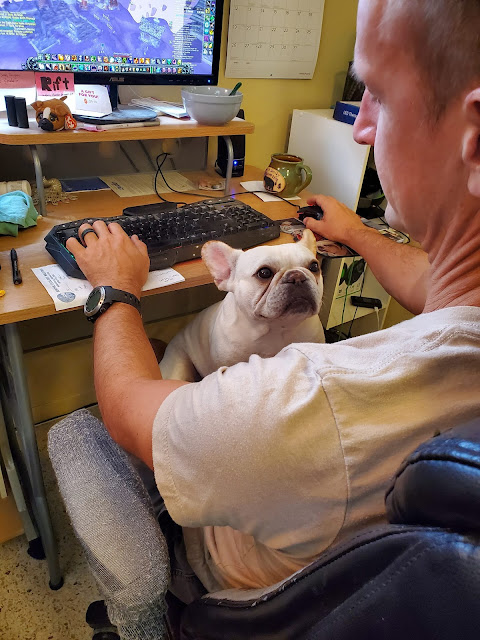
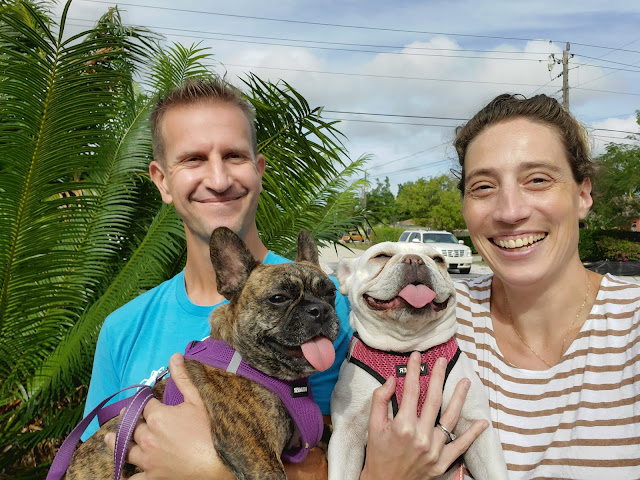
Prior to Ian, 2022 was going pretty well for Rhonda, myself, and our French bulldogs Petunia and Violet. I was busy with my job as a marine biologist at Florida Gulf Coast University- teaching classes, advising graduate students, and doing some fun research using scuba diving to study the effects of coastal pollution on underwater habitats offshore of Lee and Collier Counties. Rhonda was busy writing a new speculative fiction novel and working part-time as a store clerk at the HomeGoods down the street. We were looking forward to Rhonda's sister and nephew visiting.
Phase 1: Weather Watching
Up until September, the 2022 Western Atlantic Hurricane Season had been pretty dull. But it got spicy quick, with Hurricane Fiona becoming a big baddie that walloped Puerto Rico, the Dominican Republic, and even Nova Scotia. Hurricane Ian then took the stage, moving west through the Caribbean as a tropical storm then strengthening and turning north, with the western tip of Cuba and the Gulf Coast of Florida "in the cone." The early forecasts had it hitting somewhere north and west of us; Tampa Bay looked imperiled, but the Fort Myers / Naples area not so much. I cancelled my lab's plans to do scuba diving research, though, because the Gulf would be too rough and our crew would need to be making hurricane preparations at the university's Vester Marine Field Station. Rhonda had to cancel her sister's plan to visit. I got increasingly nervous while looking at iWindsurf.com forecast models which showed our coast getting a sustained beating from the onshore winds on the south side of Ian's counter-clockwise rotation. This was a scenario I'd also worried about when weather-watching Hurricane Irma- A storm offshore in the gulf can be more dangerous than one passing directly overhead, because of the way the onshore wind field can build a massive surge. Irma had caused major storm surge in the Florida Keys, but because it then then came due north over land it caused "only" wind damage and rainfall flooding in SW Florida. Ian, with a potential approach from the Gulf, looked like it could deliver the surge that Irma had only threatened. By Sunday the 25th some of the models and warnings coming out the National Hurricane Center were making it look really scary for us, fleshing out that storm surge from the gulf scenario. The NHC has a model now that can show a high-resolution, color-coded map of areas that may be inundated. The house we rent in Bonita Springs is only about 2 meters above mean sea level, and its near the tidally-influenced Imperial River; a water highway that can would conduct storm surge from the Gulf of Mexico, through Estero Bay, into my living room. So naturally it was flooding in those models, and each time I checked, like between teaching classes on Monday, it looked worse.
Phase 2: Evacuation
Work/school was cancelled for Tuesday the 27th, and a mandatory evactuation was ordered for low lying parts of Lee County that morning. In retrospect, the evacuation order should probably have come earlier. This is something that has become a major controversy in the hurricane's aftermath since so many people ended up dying in the storm who might have evacuated had the order come earlier. As it was, Rhonda and I had to scramble to make our evacuation plans, picking which of our friends or family outside of the hurricane's path we would choose to burden with ourselves and our not-quite-potty-trained dogs for who knows how long. Ultimately we decided that Valerie Dinsdale, our long time family friend who knows lives in Palm Beach Gardens in East Central Florida, was who we would crash with. We actually kind of dallied around our house on Tuesday morning the 27th, figuring we'd drive over later in the day and wanting to enjoy our coffee and not unplug our computers and stuff right away. In retrospect we should have dropped everything and frantically moved all precious things to the highest shelves and stuff. By the time we did get ourselves, our dogs, our dog beds, dog crates, dog pee pads, dog food, dog leashes, dog medicines, and other important things we didn't want to lose in a flood like our birth certificates and social security cards, loaded into the car, it was 6 pm or so and already raining hard. On the drive across the state we took back roads and avoided traffic, but the weather was hellacious, with our phones buzzing every five minutes with more emergency warnings of tornados, flooding, etc. etc.
Phase 3: At Valerie's
Despite getting drenched bringing stuff in from the car at Valerie's house, and struggling to get the dogs properly quarantined in her laundry room, we felt a lot of relief to be out of harms way. Valerie never lost power, so the next day we had a front-row tv and computer seat to the tragedy and destruction unfolding on the west coast of the state. I got intermitent text reports from my neighbor who had stayed home, and they were not encouraging. "Everything is floading." "We are evacuating." And later, "There is a tree on your house." You've surely seen the news reports so you know: it was BAD. As predicted the storm surge reached our house, and it was more than a foot deep around the outside based on the line left on the wall. We were anxious to return to see the damage and attend to the house, but we knew we couldn't go right away because we wouldn't have a safe place to keep the dogs air conditioned and cool. (Because of their brachycephalic heads and constricted air passages, bulldogs can't keep themselves cool in hot weather and they easily die of heatstroke. Rhonda and I still feel terrible about her English Bulldog Buri who died that way on the the 4th of July 2012. We think the Buri-spirit supported our decision to hang out with Valerie for a few more days.)
Phase 4: Coming home, sort of
I honestly don't even remember what exact day we left Valerie's, but it was a shit day. We had found an animal hospital open less than an hour from our house in the town of Labelle, so our plan was to drop the pups off there, then clean the house up and retrieve the dogs from boarding once we had power. The plan was derailed because it turned out that the "animal hospital" in Labelle was a squalid nightmare based out of an old schoolbus and damp, falling-down trailer, which reeked of mold and feces and of course had no power. So after a tense marital discussion we determined that we would travel to our home for just a few hours, keeping the dogs in the shade or in the air conditioning of the car, then Rhonda would return with them to Valerie's and I would stay in the house to do whatever I could to salvage things and make it habitable. Arriving at the house we could clearly see the black smudge of the high water line on the outside, and it was more than a foot up, pretty discouraging. Inside it was nasty and wet, but our forensic work indicated that the water inside had only reached about 10 cm / 3 inches deep. 10 cm was enough to ruin any water-absorbent thing on or low to floor. So that was all the upholstered furniture and the lower shelf of the bookshelves and filing cabinets, but thankfully not the bed, the futon, or the dressers that were on legs. The stench inside was a horrendous mix of rehydrated dog pee, sewage, leaf litter, mildering clothing, and wet drywall and insulation. We hurriedly mopped up the standing water in the low spots of the floor and started moving ruined things out to the curb, then moving possibly saveable things to the covered lanai area. Rhonda and the dogs left and I spent my first night sweating with windows open and no covers on atop the bed surrounded by an epic mess. The next day or so was all about moving stuff out, boxing up dry things that there were no longer shelves for (got a million giant tupperware things from the hardware store), jury rigging a window unit AC and dehumidifier on a generator with help from my work buddy Serge and Rhonda's cousin Mike. Concurrently I was in frantic negotiations with the landlord to see what to do about the wet drywall, which becomes an epic mold problem if not removed soon. I got the go-ahead to remove it, and got some tips from my paddle buddy Matt Kearney on how to do so. One of the worst things was just drawing the line around the entire house at exactly 26" high, which is tricky when you're moving things which have no place to go, crawling around like a mole inside closets, etc. I forgot to wear a mask the first day of drywall removal so I'll probably die of asbestosis, but I wore a mask after that. The one good part of those hell days of all work and no electricity was meeting and bonding with a bunch of my neighbors that I hadn't really known before. As messed up as my house was, I was actually among the lucky ones, since a lot of folks closer to the River or bay had head-high water in their homes and lost everything inside. Worst of all, of course, were the folks who lived near the open coast whose entire houses were knocked down and swept away. It does make one question the wisdom of rebuidling in some of the lowest, most coastal areas. I'd like to see folks find ways to turn those areas mostly into public parks and beaches.
Phase 5: The lingering nightmare
One horrifying discovery when removing the drywall, along with the spiders, roaches, piles of lizard eggs, pine straw rat middens, and actual TOAD under the sink, was that an addition to the house had tons of pre-existing rot in the walls from where the roofs of the new and old part of the house weren't mated right and water got in. You know the rot is bad when you can actually vacuum up boards like wet coffee grounds with the shopvac. It's like, if I ever wondered why my rent was cheaper than average, now I knew. The horror of the mildew and stuff abated once everything was dried and out and vacuumed out and bleached and carted to the mountain of house guts on the curb (matching the mountains of house guts all down the street, and in every adjoining neighborhood, for miles and miles), and the power came on and Rhonda and the dogs were able to come back. But it's still unsettling living in this frankenhouse where the dogs can run freely from any room into any other and we don't know if the landlord is ever going to fix it and wonder if we could afford a different place. My pay has gone up about 10% since I moved here in 2012, but the average rent in town is like 2 or 3 times higher than it was. Cherished luxuries I've enjoyed, like having a shed for windsurfing boards and water within walking distance to go paddleboarding in, are things I maybe shouldn't have taken for granted. Although I'm not sure the "water nearby" thing is the unqualified perk that it initially appeared, especially with the sea level rising and stuff.
Phase 6: Life goes on, and science
October 10th was my first day back at work at FGCU, with a full schedule of classes and all the usual stuff, plus a lot of hurricane talk and catching up. I had 276 unread emails on the first day- yikes! One of the important things in those unread emails was that my scientific collaborators on our EPA-funded SW Florida shelf research project had arranged an alternate strategy for getting our October sampling done despite our marine research station being trashed. That alternate way is a 7-10 day cruise onboard the Florida Institute of Oceanography's boat, the R.V. Hogarth. We leave from St. Petersburg Tuesday. I should have internet so I'll try to do some posts of our scientific findings. We'll also have a reporter and cameraman onboard from SW Florida's Wink News. We expect to find a lot of murky, polluted water, and possibly some nasty knock-on effects of all the pollution and rotting material that has been injected into the Gulf; effects like algal blooms and oxygen depletion smothering sea bottom life.





Wednesday 11 18 26 morning call
43 minutes ago


